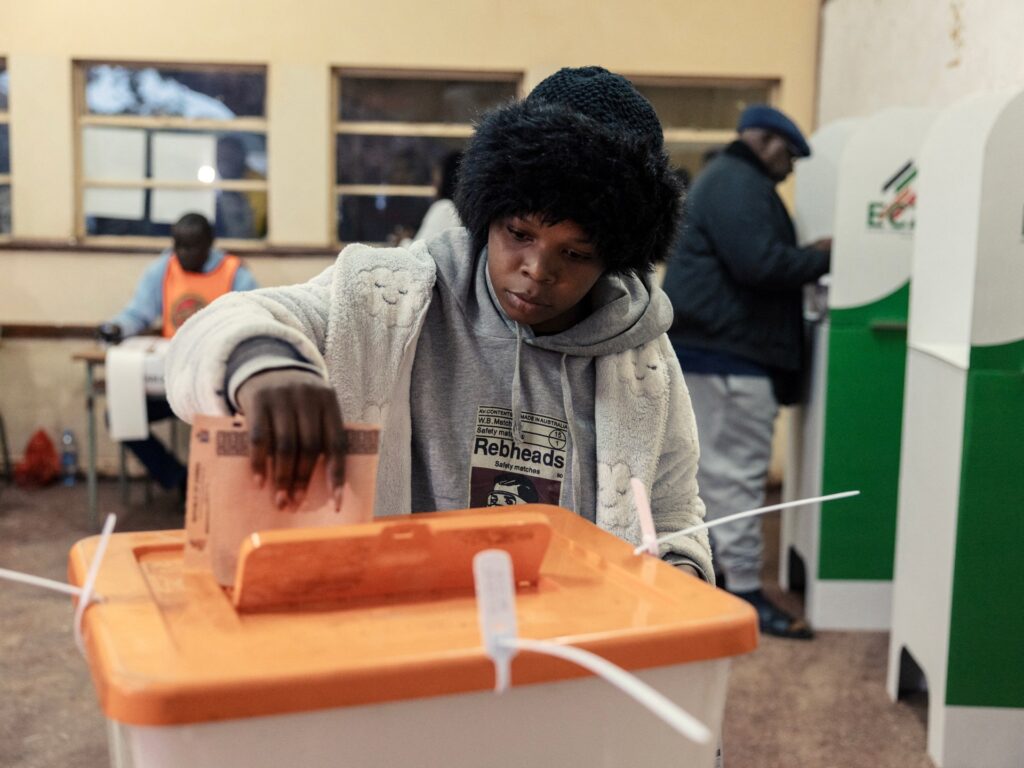
Zambia has commenced voting in its highly anticipated presidential election, a pivotal moment that will serve as a referendum on the incumbent President Hakainde Hichilema’s economic reforms. Known for his efforts to steer the country towards fiscal stability and growth, Hichilema faces a formidable challenge as the electorate weighs his government’s performance against persistent economic frustrations.
The election unfolds amid a complex backdrop of economic challenges including inflation, unemployment, and public dissatisfaction with living conditions. Hichilema, who came to power promising to reform Zambia’s economy, has implemented a series of measures aimed at stabilizing the nation’s finances and attracting foreign investment. His policies include efforts to reduce national debt, increase transparency, and boost agricultural and mining sectors.
However, despite these reforms, many Zambians continue to experience economic hardship, with high prices and limited job opportunities fueling discontent. Opposition candidates are capitalizing on this frustration, campaigning on platforms that promise more immediate relief and alternative strategies for economic revival.
International observers and local stakeholders alike view this election as a crucial test not only for Hichilema’s leadership but also for Zambia’s democratic resilience. The voting process has been closely monitored to ensure fairness and transparency, reflecting the country’s commitment to strengthening its electoral institutions.
Analysts suggest that the election results will have significant implications for Zambia’s future policy direction. A victory for Hichilema could mean a continuation and deepening of his reform agenda, potentially attracting further international support and investment. Conversely, a win for the opposition might signal a shift towards new economic policies and possibly more populist measures.
Economic experts underline that while reforms often take time to yield visible benefits, the immediate concerns of the population cannot be overlooked. The election serves as a critical barometer of public confidence in the government’s ability to manage the economy and improve living standards.
The voter turnout and election results will be closely watched across the region, as Zambia’s economic health impacts its neighbors and trade partners. The outcome could also influence investor sentiment in the broader Southern African market.
As polls remain open, citizens are urged to participate actively in the democratic process, emphasizing the importance of their vote in shaping the future of their nation. The election marks a defining moment for Zambia, reflecting the intersection of political accountability and economic aspirations.
In conclusion, the current presidential election in Zambia is more than a contest for leadership; it is a crucial test of economic policies aimed at reversing years of financial challenges. The decision rendered by the voters will steer the country’s trajectory, highlighting the delicate balance between reform efforts and public expectations in a dynamic political landscape.