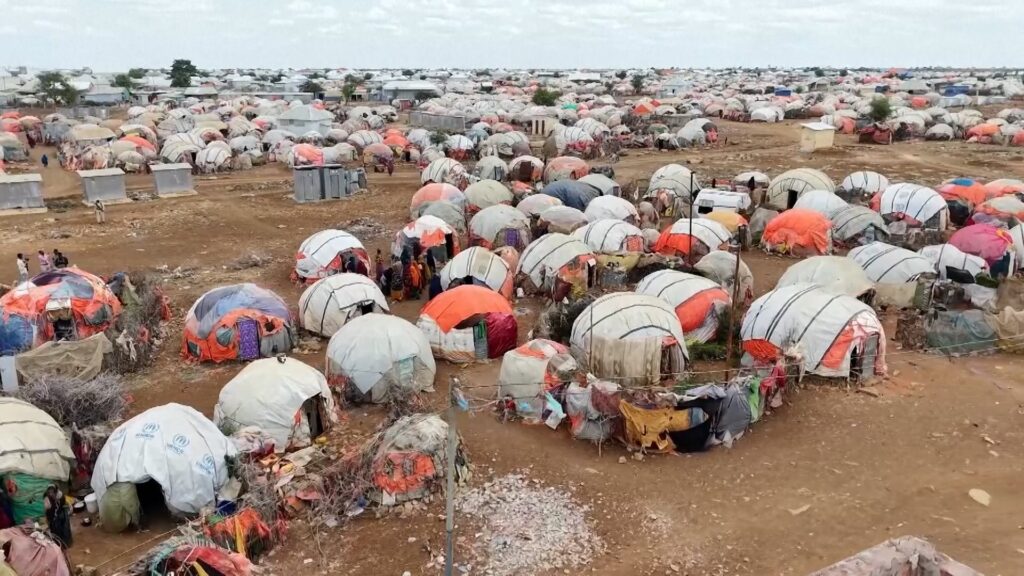
Somalia is currently facing a severe humanitarian crisis as thousands of families are forced to flee their homes due to an extended drought that has devastated livestock and farms. The yearslong drought has plunged the region into one of its most challenging periods, decimating the primary sources of livelihood for many Somali families and leaving tens of thousands hungry and vulnerable.
The persistent lack of rainfall has not only dried up water sources but has also led to widespread crop failure across rural areas. Many families relied heavily on their livestock—camels, goats, and cattle—which are now either dead or severely weakened due to the lack of forage and water. This collapse of the agricultural and pastoral economy has forced mass displacement as communities seek sustenance and safety elsewhere.
Unfortunately, the severe conditions coincide with a sharp decline in international humanitarian aid to the region. Global assistance, which had been a critical lifeline for the drought-affected communities, has diminished due to various factors including donor fatigue, shifting geopolitical priorities, and funding reallocations to other global crises.
Aid organizations operating in Somalia report alarming challenges in reaching the most affected populations. Transport and logistical bottlenecks compounded by security concerns in some regions have further constrained relief efforts. Moreover, the reduction in aid inflows means less food, clean water, and medical supplies are available, exacerbating the humanitarian needs.
Humanitarian agencies warn that if the decline in aid is not swiftly addressed, the situation will worsen, potentially resulting in escalated malnutrition rates, increased mortality, and destabilization of already fragile communities. They emphasize the urgent need for renewed donor commitments to stave off a deeper catastrophe.
Local authorities and international bodies are calling on the global community to act immediately. There is an urgent appeal for increased financial support and resources to bolster relief operations, provide emergency water supplies, food aid, and support to rebuild pastoral livelihoods.
The current drought crisis in Somalia underscores the urgent need for sustainable solutions to climate change and poverty, which disproportionately impact vulnerable populations. Experts advocate for investing in drought-resistant agriculture, improved water management systems, and early-warning mechanisms to mitigate the long-term effects of such climatic shocks.
As the people of Somalia grapple with the harsh realities of this drought, a coordinated humanitarian response and sustained international support remain critical to saving lives and restoring hope for a better future. Without immediate and enhanced aid efforts, the plight of the drought-stricken families is expected to deepen, entrenching hardship across the nation for years to come.