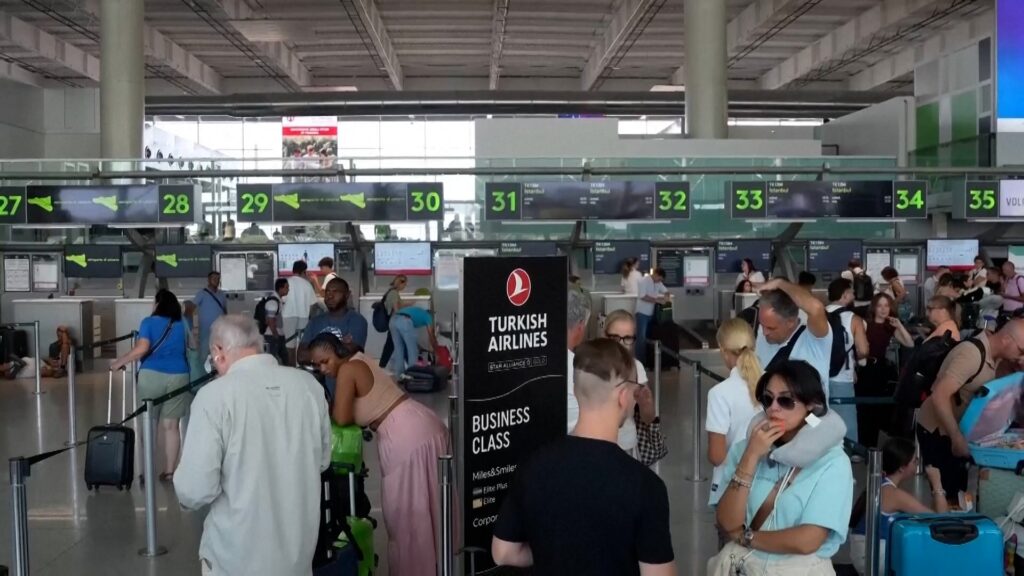
Mount Etna, Europe’s most active volcano located in Sicily, erupted recently, causing significant disruptions at Italy’s Catania airport. The eruption led to the release of large ash clouds, forcing the temporary closure of the airport and leading to widespread travel chaos.
Hundreds of passengers were left stranded as flights were delayed or canceled, causing frustration and inconvenience for travelers. The ash fall from the eruption posed a serious safety risk for aircraft operations, necessitating the immediate halt of flights to and from the airport.
Airport authorities worked closely with emergency services and volcanic experts to monitor the situation. They implemented contingency measures to handle the surge of stranded passengers, including setting up information desks and providing accommodations where possible.
The eruption of Mount Etna is a reminder of the persistent volcanic activity in the region, which sometimes disrupts daily life and travel. Authorities continuously monitor the volcano to predict and mitigate the impact of future eruptions.
Officials have urged travelers to check flight statuses regularly and to stay informed through official channels. They also highlighted the importance of heeding safety advisories and avoiding unnecessary travel to areas affected by volcanic ash.
The airport is expected to resume normal operations as soon as it is safe, with efforts underway to clear the ash and assess any damage caused by the eruption. Meanwhile, passengers are advised to remain patient and cooperate with the authorities as the situation evolves.
This event underscores the challenges posed by natural disasters to transportation infrastructure and the importance of preparedness in minimizing their impact on travelers and local communities alike.