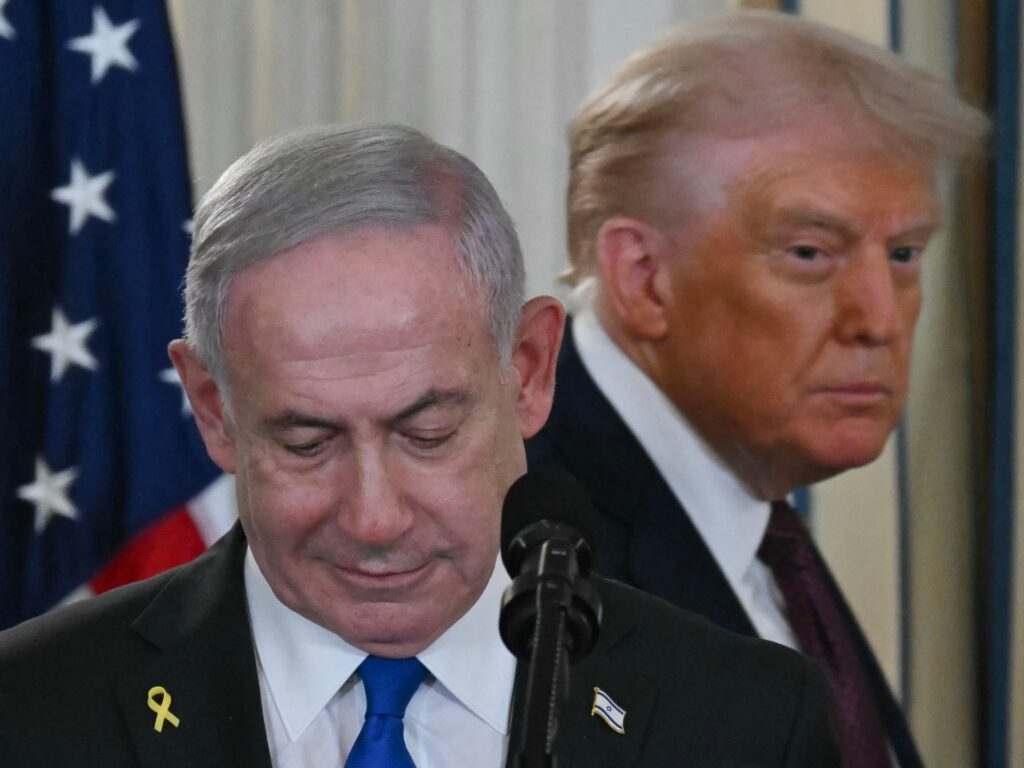
US President Donald Trump has publicly stated that his relationship with Israeli Prime Minister Benjamin Netanyahu remains strong despite Netanyahu’s recent rejection of the proposed Gaza peace plan. This development has significant implications for US-Israel relations and the peace process in the Middle East.
President Trump has been actively involved in attempting to broker peace between Israel and Palestine, with a particular focus on the Gaza Strip, a historically volatile region. His administration unveiled a peace plan intended to bring stability and resolve longstanding conflicts.
However, Israeli Prime Minister Netanyahu has expressed disapproval of the plan, citing concerns over security and territorial issues. Netanyahu’s rejection was seen by many as a setback to the Trump administration’s diplomatic efforts in the region.
Despite this political divergence, President Trump emphasized that the personal and professional relationship between him and Netanyahu remains intact. Trump highlighted that disagreements on policy are a natural part of diplomacy and do not affect the broader alliance between the United States and Israel.
The US-Israel alliance is founded on shared strategic interests, including security cooperation, intelligence sharing, and mutual support in international forums. Both leaders have underscored the importance of maintaining close ties to address common challenges.
Experts note that while the peace plan’s rejection is a diplomatic hurdle, it also reflects the complexities of Middle Eastern politics where peace efforts must navigate deep-seated historical grievances and national security concerns.
President Trump’s reassurance aims to maintain stability in US-Israel relations and signal continued commitment to collaborating on future initiatives despite setbacks.
Additionally, the Trump administration has indicated openness to revisiting and modifying the peace plan to address Israeli concerns, suggesting that dialogue remains ongoing.
The Palestinian response to Netanyahu’s rejection has been mixed, with some factions expressing disappointment while others remain skeptical of the peace process altogether.
As the situation evolves, both Israeli and US leaders face the challenge of balancing domestic political pressures with international diplomatic goals.
The Trump-Netanyahu relationship, characterized by both personal friendship and political alliance, plays a critical role in shaping the strategy for peace in the Middle East.
Observers will be watching closely to see how this relationship influences future negotiations and whether the peace plan can be adapted to achieve broader acceptance.
In conclusion, despite Netanyahu’s rejection of the Gaza peace plan, President Trump maintains that the relationship between himself and the Israeli Prime Minister is sound. This stance underscores a commitment to ongoing diplomatic engagement and reflects the complexities of achieving peace in a region fraught with conflict.
The continuation of strong US-Israel ties will be crucial as both nations work towards addressing security concerns and seeking pathways to lasting peace in the Middle East.