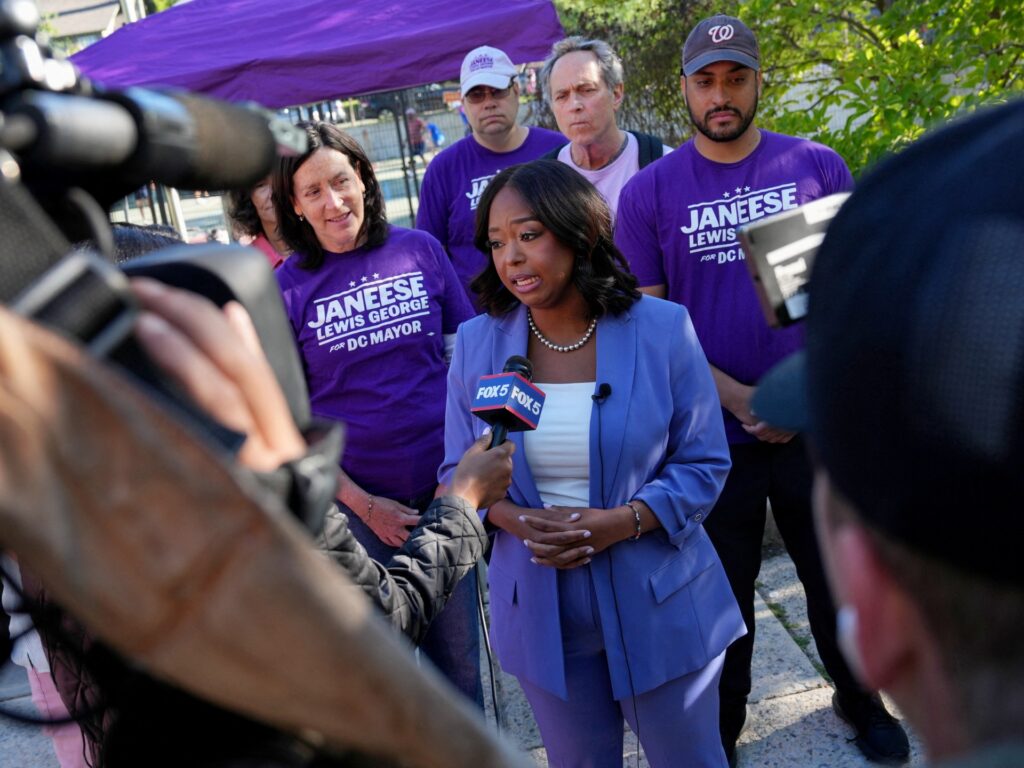
In a significant development in the political landscape of Washington DC, Lewis George, a US progressive and Democratic Socialist, is on track to become the next mayor of the city. George’s rise comes amidst a heated political backdrop marked by former President Donald Trump’s outspoken threats about the governance of the capital.
Lewis George, known for her staunch progressive policies and advocacy for social justice, healthcare reform, and economic equity, has garnered substantial support among the residents of Washington DC. Her campaign has energized a broad base of voters eager to see transformative changes in the city’s leadership and policy directions.
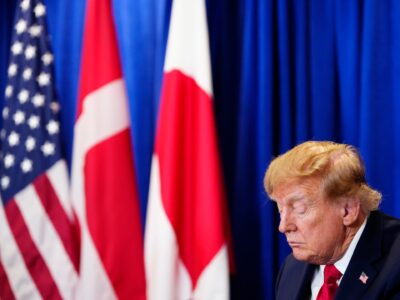
What sets this mayoral race apart is not just George’s progressive platform but the direct challenge it poses to Trump. The former president has publicly stated that he could “take back” Washington DC if George wins the mayoral seat, a statement that has caused significant controversy and debate.
George has responded with a vow of aggressive and proactive policies to defend the city’s autonomy and uphold the values of its diverse population. She emphasizes the importance of local governance free from external interference and is committed to strengthening democratic institutions in DC.
The potential election of Lewis George as mayor signals a shift towards more progressive and inclusive governance in the nation’s capital. It represents a broader national trend where progressive leaders are increasingly gaining prominence and challenging traditional political paradigms.
Throughout her campaign, George has focused on key issues such as affordable housing, improving public education, expanding healthcare access, and fostering sustainable development. Her approach aims to address the systemic inequalities that have long impacted underserved communities in DC.
The political tension surrounding this election is palpable, highlighting the deep divisions in American politics today. Trump’s threats indicate his unwillingness to accept progressive gains in key urban areas, reflecting a larger national struggle between conservative and progressive forces.
Local and national political analysts are closely watching the race, noting that George’s potential victory could inspire similar progressive campaigns across the country. It could also intensify the ongoing political conflicts that define the current American political climate.
Community leaders and activists in Washington DC express optimism about George’s chances, seeing her as a representative who understands and prioritizes the needs of the city’s diverse populations.
If elected, Lewis George is expected to lead with a bold agenda aimed at promoting social justice, economic opportunity, and political empowerment for all residents of the city.
The final outcome of this election will be a crucial moment for Washington DC’s future and could have lasting implications for the national political landscape, especially considering the contentious backdrop set by Trump’s remarks.
As the city prepares to elect its new mayor, the eyes of the nation remain fixed on Washington DC, anticipating a new chapter in its political narrative driven by progressive leadership and a commitment to local autonomy.