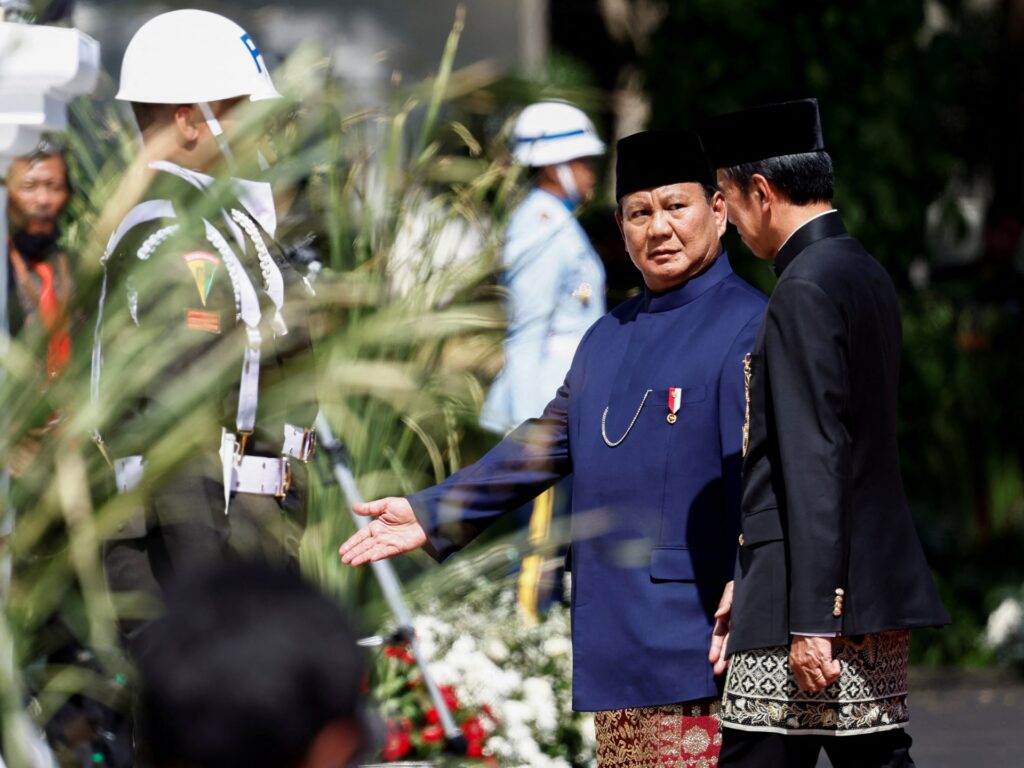
Indonesia is in the midst of a deepening political scandal following the revelation of a fourth suspect involved in a high-profile wiretapping case. This scandal is exacerbating tensions between the country’s current President Prabowo Subianto and his predecessor Joko Widodo, highlighting the growing divisions within the nation’s political landscape.
The wiretapping case initially surfaced as a major breach of national security and privacy, stirring public outrage and intense scrutiny of the individuals involved. The inclusion of a fourth suspect broadens the scope of the investigation, suggesting that the wiretapping operation was more extensive and possibly more politically motivated than previously understood.
President Prabowo Subianto, who took office after Joko Widodo, has been under pressure to address the scandal decisively. The case threatens to undermine his administration’s credibility, especially as it appears to implicate figures connected to the previous government led by Widodo.
Political analysts suggest that the scandal is not just a law enforcement issue but a significant political intrigue that reveals deep rifts between the two leaders and their supporters. Prabowo has accused Widodo’s camp of orchestrating the wiretapping to gain unfair political leverage, while Widodo’s allies deny these allegations, accusing Prabowo of using the scandal to destabilize the political arena.
The accusations and counter-accusations have polarized public opinion, with supporters of each leader rallying around their respective camps. The media coverage has been intense, often framing the wiretapping as a symbol of broader issues such as corruption, abuse of power, and erosion of democratic norms in Indonesia.
Legal experts have called for an impartial and transparent investigation to ensure justice is served and to restore public trust. There is concern that if the investigation is perceived as biased or politically motivated, it could further deepen the political divide and destabilize the government.
Meanwhile, civil society organizations have demanded accountability and reforms to prevent such surveillance abuses from recurring. They emphasize the importance of protecting citizens’ privacy rights and strengthening institutional checks and balances in Indonesia.
As the investigation continues, the Indonesian government faces the challenge of navigating this politically sensitive case carefully. The outcome could have significant implications for the country’s political stability and the relationship between the current and former presidents.
This scandal serves as a critical test for Indonesia’s democratic institutions and the rule of law. Observers are watching closely to see whether the country can overcome these divisions and move towards greater political transparency and unity.
In summary, the unmasking of a fourth suspect in the wiretapping scandal has intensified the political intrigue in Indonesia, further dividing President Prabowo Subianto and Joko Widodo. The developments underscore the urgency for a fair investigation and a recommitment to democratic principles amid growing political tensions.