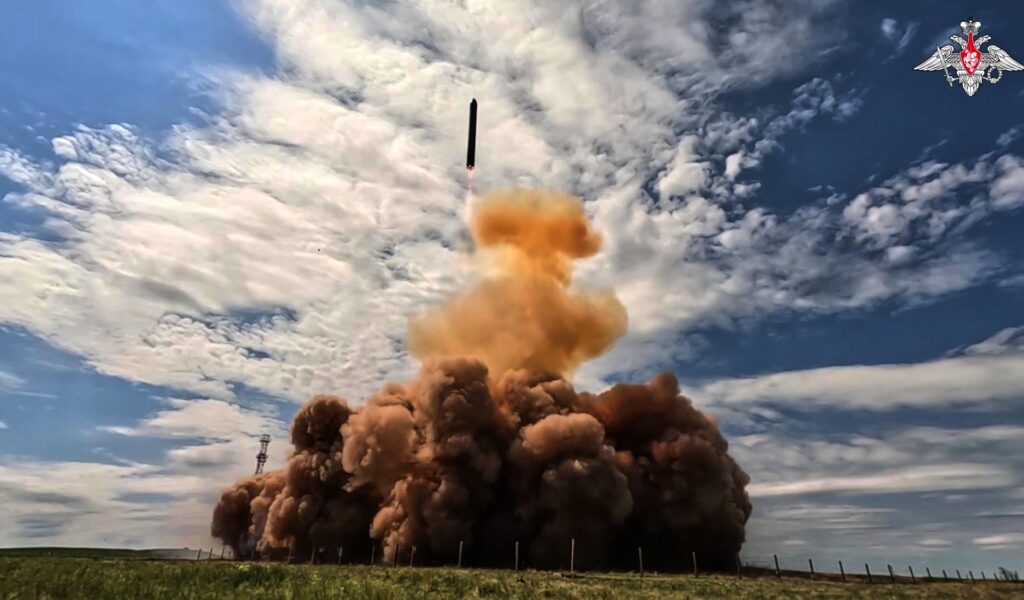
Russia has recently test-launched the RS-28 Sarmat missile, which President Vladimir Putin has described as “most powerful” with a range exceeding Western estimates. This missile, part of Russia’s strategic nuclear arsenal, represents a significant advancement in the country’s military capabilities.
The RS-28 Sarmat, often referred to as the ‘Satan 2’ by NATO, is an intercontinental ballistic missile (ICBM) designed to replace the aging R-36M missile series. Its development aims to maintain Russia’s strategic balance and enhance its nuclear deterrent.
Key features of the Sarmat missile include its massive payload capacity, the ability to carry multiple independently targetable reentry vehicles (MIRVs), and advanced countermeasure technologies that complicate interception by missile defense systems.
President Putin asserted that the Sarmat missile’s operational range dramatically exceeds the limits previously estimated by Western analysts, effectively enabling it to strike any location worldwide. This extended range and flexibility significantly bolster Russia’s strategic reach.
The missile is capable of delivering a variety of warheads, including conventional and nuclear, and is designed to penetrate missile defenses through unpredictable flight paths. Moreover, the Sarmat’s large size allows it to carry a heavier payload, increasing destructive potential.
This test launch underscores Russia’s commitment to modernizing its strategic forces amidst evolving global security dynamics. The deployment of Sarmat missiles poses a strategic challenge to NATO countries, prompting a reevaluation of missile defense and deterrence strategies.
Analysts view the Sarmat as a step forward in the nuclear arms race, with capabilities that could potentially destabilize existing arms control treaties. Its deployment highlights the ongoing importance of nuclear weapons in national security doctrines.
While the missile was tested successfully, questions remain about the timeline for its full operational deployment. Russia has indicated that the Sarmat missile system will enter service soon, enhancing the country’s strategic posture.
The development and test launch of the RS-28 Sarmat reflect broader trends in military technology, where offensive capabilities are being prioritized to overcome emerging defenses. This pursuit of advanced missile technology is likely to intensify strategic competition globally.
In summary, the Sarmat missile stands as one of Russia’s most powerful strategic weapons, with a range surpassing previous estimates and the capability to deliver devastating payloads anywhere in the world. Its successful test launch marks a milestone in strategic missile development and underscores the shifting dynamics in global military power balances.