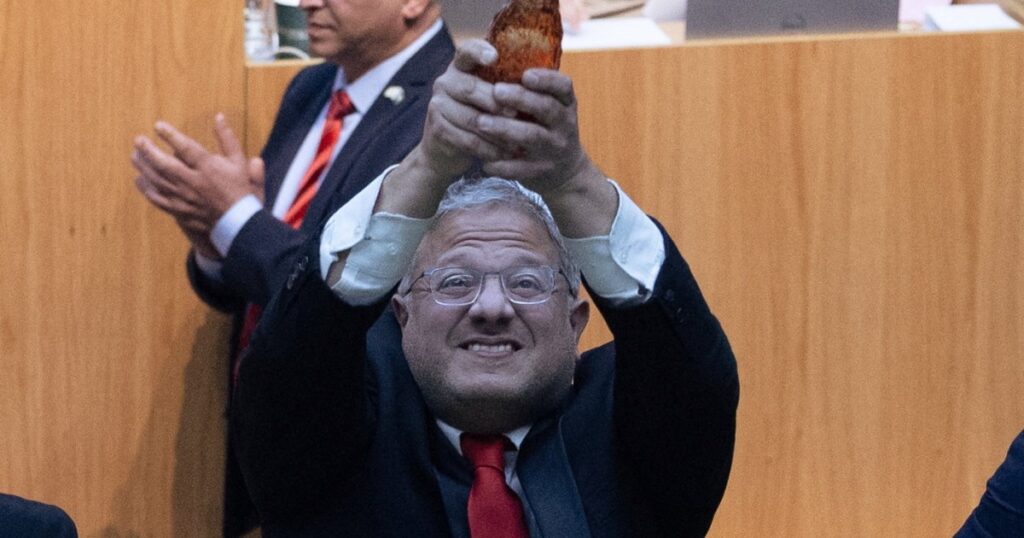
Itamar Ben-Gvir is undeniably one of the most polarizing figures in contemporary Israeli politics. As a prominent member of Israel’s hard right, he has attracted significant attention, both domestically and internationally. Critics within Israel decry his rhetoric and policies, branding him as a symbol of extremism. Yet, many political analysts argue that Ben-Gvir’s rise reflects more than just fringe elements; he holds up a mirror to significant sectors of Israeli society itself.
Ben-Gvir’s political journey mirrors the shifting landscape of Israeli politics, where nationalist and hard-line perspectives have gained traction over the past decade. His rhetoric against Palestinians and Arab citizens of Israel, viewed by many as incendiary, resonates with a sizeable constituency concerned about security and national identity. This constituency, often feeling marginalized or threatened by regional instability and internal divisions, sees Ben-Gvir as a champion of their interests.
Despite internal criticism from within the Israeli political establishment, Ben-Gvir’s influence continues to grow. His success in recent elections underscores a broader societal trend, where issues of security, nationalism, and religious identity dominate public discourse. His supporters argue that he represents a necessary voice that challenges the political status quo and addresses concerns that more moderate politicians often overlook.
Analysts suggest that Ben-Gvir is more than just a hard right figure; he embodies prevalent attitudes in Israeli society. Many Israelis share his stance on issues such as sovereignty over disputed territories, the role of Judaism in the state, and the perceived threats from Palestinian groups. His rhetoric, while controversial, reflects deep societal anxieties and aspirations.
Yet, this raises complex questions about the future of Israeli democracy and coexistence. Critics warn that Ben-Gvir’s leadership could exacerbate divisions and undermine efforts toward peace with Palestinians. His hardline approach risks alienating minorities and straining international relations. However, his supporters believe that only a firm stance can preserve Israel’s security and Jewish character.
Ben-Gvir’s prominence also sheds light on the broader challenges faced by Israeli society, including questions of identity, security, and the balance between democracy and nationalism. His presence in the political arena compels a national conversation about the values and future direction of the state.
In conclusion, Itamar Ben-Gvir is not just the face of Israel’s hard right; he represents a substantial and complex segment of Israeli society. His rise is a reflection of ongoing societal tensions and debates about security, identity, and the future. Understanding Ben-Gvir’s role helps to understand the challenges and contours of modern Israel, a nation grappling with its diverse identities and aspirations in a volatile region.