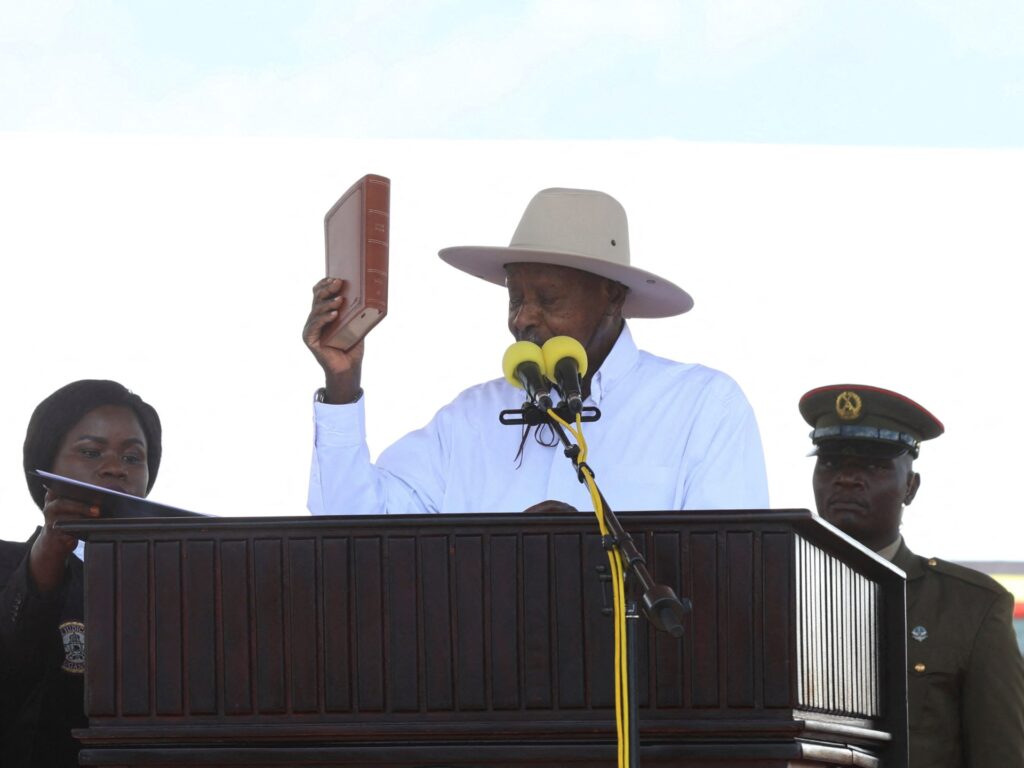
Yoweri Museveni, the long-standing leader of Uganda, has been sworn in for his seventh term as president. At 81 years old, Museveni has been in power since 1986, making him one of Africa’s longest-serving leaders. His recent victory in the January election has stirred controversy due to reports of intimidation and abductions during the electoral process.
Museveni’s presidency began in 1986 after he led a successful rebellion, and since then, he has maintained a firm grip on power. Over the years, he has been credited with stabilizing Uganda after years of turmoil, but his tenure has also faced criticism for authoritarian tendencies. The January election results continue this pattern, with opposition groups and international observers raising concerns about the fairness of the vote.
Reports emerged during the election period alleging acts of intimidation and abductions targeting opposition candidates and supporters. These allegations have cast a shadow over the legitimacy of the election, with many questioning the democratic process in Uganda. Despite these challenges, Museveni secured a decisive win, paving the way for another five years at the helm.
Analysts note that Museveni’s continued hold on power reflects the complex political landscape in Uganda, where his National Resistance Movement (NRM) party remains dominant. Critics argue that Museveni’s extended rule stifles political pluralism and weakens democratic institutions, while supporters claim that his experience and leadership are vital for Uganda’s development and stability.
The international community has called for respect of human rights and democratic norms in Uganda, urging the government to ensure a free and fair political environment. Nevertheless, Museveni’s seventh term promises to continue the policies and governance style that have defined his decades-long presidency.
As Uganda navigates this new chapter, the balance between stability and political freedom will be closely watched by citizens, regional neighbors, and global observers alike. The impact of Museveni’s leadership on Uganda’s future political, economic, and social landscape remains a key area of interest in the coming years.