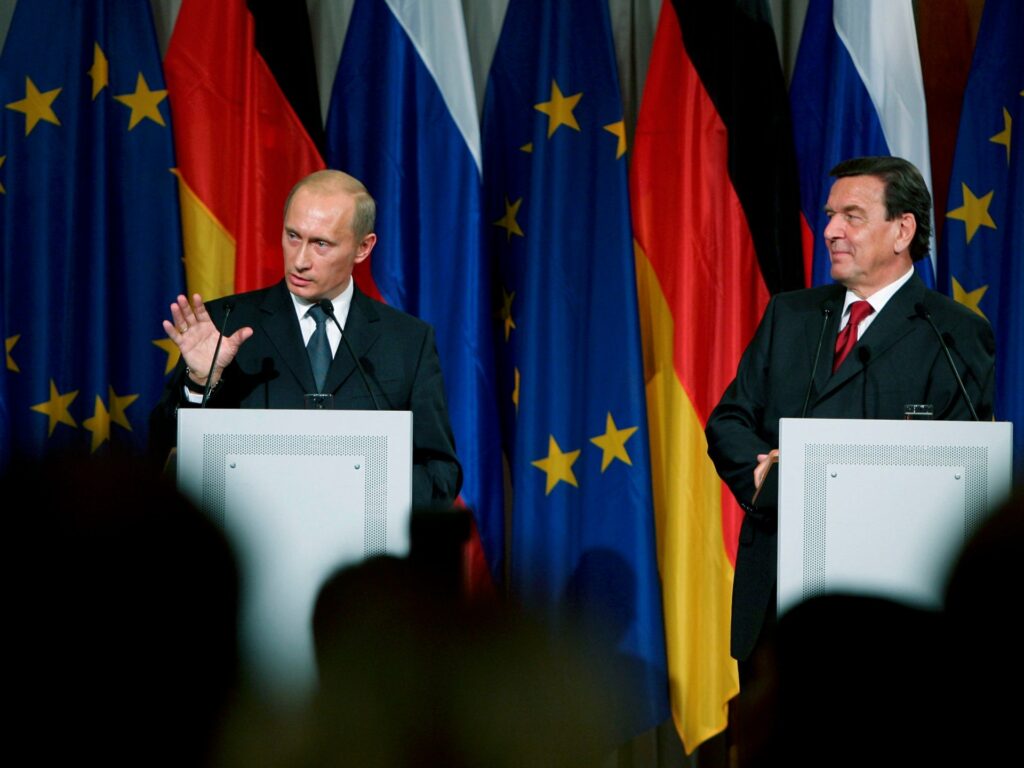
Gerhard Schröder is a prominent German politician who served as Chancellor of Germany from 1998 to 2005. As a member of the Social Democratic Party of Germany (SPD), he played a significant role in shaping German domestic and foreign policy during his tenure. Schröder is known for his pragmatic and sometimes controversial stances, including his opposition to the Iraq War and efforts to reform Germany’s welfare system.
In recent years, Schröder has become a contentious figure due to his close ties with Russian leader Vladimir Putin and Russian energy companies, particularly Gazprom and Rosneft. After leaving office, Schröder took on roles in the boards of major Russian state-linked energy firms, which has raised concerns among Western countries over potential conflicts of interest and his political leanings.
Putin’s nomination of Schröder as a mediator for peace talks regarding the Ukraine conflict underscores the trust and rapport between the two leaders. Russia likely views Schröder as a sympathetic and understanding intermediary who could help facilitate dialogue.
However, this nomination has been met with significant skepticism and criticism from Ukraine and many Western governments. Ukraine, which views Schröder’s close ties to Russia as indicative of potential bias, may question his impartiality and the credibility of any peace proposals he might champion. Western countries, particularly members of the European Union and NATO, have similarly expressed reservations, concerned that Schröder’s influence could undermine efforts to hold Russia accountable for its actions in Ukraine.
The challenges to Schröder’s acceptance include his perceived alignment with Russian interests, his controversial post-chancellorship career, and the general mistrust toward actors seen as too close to Moscow in the context of the ongoing conflict. For Ukraine and the West, ensuring a neutral and fair mediation process is crucial, and Schröder’s involvement is likely to be contentious.
In summary, Gerhard Schröder is an experienced former German Chancellor with strong ties to Vladimir Putin, chosen by Russia as a peace talks mediator for Ukraine. While he might be seen favorably by Russia, his acceptance by Ukraine and Western nations remains doubtful due to concerns about his impartiality and connections to Russian state interests. The effectiveness and legitimacy of his mediation role will largely depend on whether all parties perceive him as a neutral actor capable of facilitating genuine dialogue and compromise.