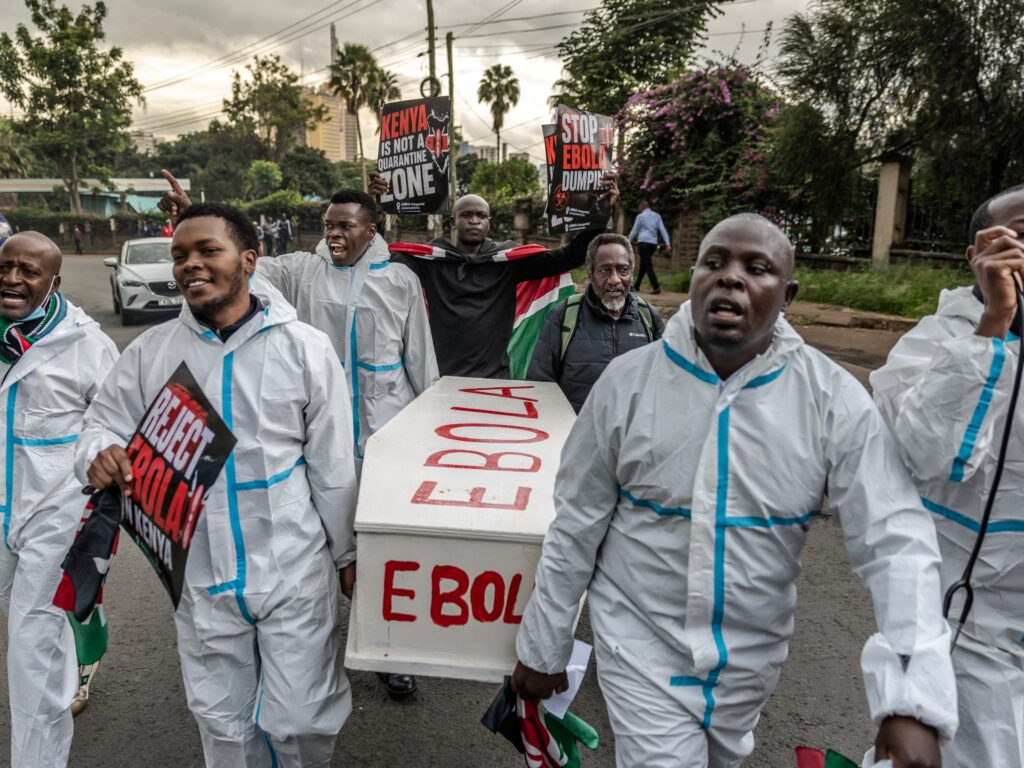
A plan to establish a US-funded Ebola treatment facility in Kenya has ignited widespread protests across the country, drawing significant backlash from both Kenyan citizens and the nation’s healthcare workers’ union. The proposed facility, intended to enhance regional preparedness against Ebola outbreaks, has been met with skepticism and opposition that highlight concerns over health sovereignty, resource allocation, and transparency.
The controversy stems from multiple factors. Many Kenyans view the introduction of a US-backed Ebola center as an imposition that disregards local input and priorities. Critics argue that the facility’s focus on Ebola—a disease largely perceived as a problem in West and Central Africa—may not align with Kenya’s more pressing health challenges, such as malaria, HIV/AIDS, and other endemic illnesses.
Additionally, the Kenya Medical Practitioners, Pharmacists and Dentists Union (KMPDU) has voiced strong criticism, emphasizing that resources might be better spent enhancing the existing healthcare system rather than setting up a disease-specific center. They warn that such specialized facilities could divert resources away from the broader health infrastructure, which struggles with staff shortages, inadequate funding, and limited access to medical supplies.
Many healthcare workers worry that the US facility could create parallel systems, leading to inequalities in service provision and potentially compromising national healthcare strategies. The union and public protests also reflect deeper issues about foreign influence and the sovereignty of Kenya’s health policy, with calls for greater transparency and local involvement in decisions about foreign-funded projects.
Concerns have also been raised regarding the facility’s location, with some residents near the proposed site fearing stigma and the risk of disease spread despite reassurances by authorities. Public mistrust has been fueled by misinformation and fear, which have been amplified on social media platforms, further complicating efforts to build consensus.
The Kenyan government has tried to reassure the public by emphasizing that the facility would serve as a regional hub, not only for Kenya but for neighboring countries, enhancing disease surveillance and response capabilities. Officials stress that the center is part of a broader strategy to strengthen preparedness against emerging infectious diseases impacting Africa.
However, the protests have compelled the government to engage in dialogue with health professionals, community leaders, and civil society groups to address concerns and ensure the project aligns with Kenya’s health priorities and capacities.
This situation highlights the challenges faced by developing countries in balancing international aid and national interests, particularly in the sensitive domain of public health. It underscores the importance of local engagement, transparent communication, and holistic health planning in deploying resources to combat infectious diseases.
As Kenya navigates this complex issue, the global health community watches closely, recognizing the implications for future collaborations aimed at strengthening epidemic preparedness in Africa.