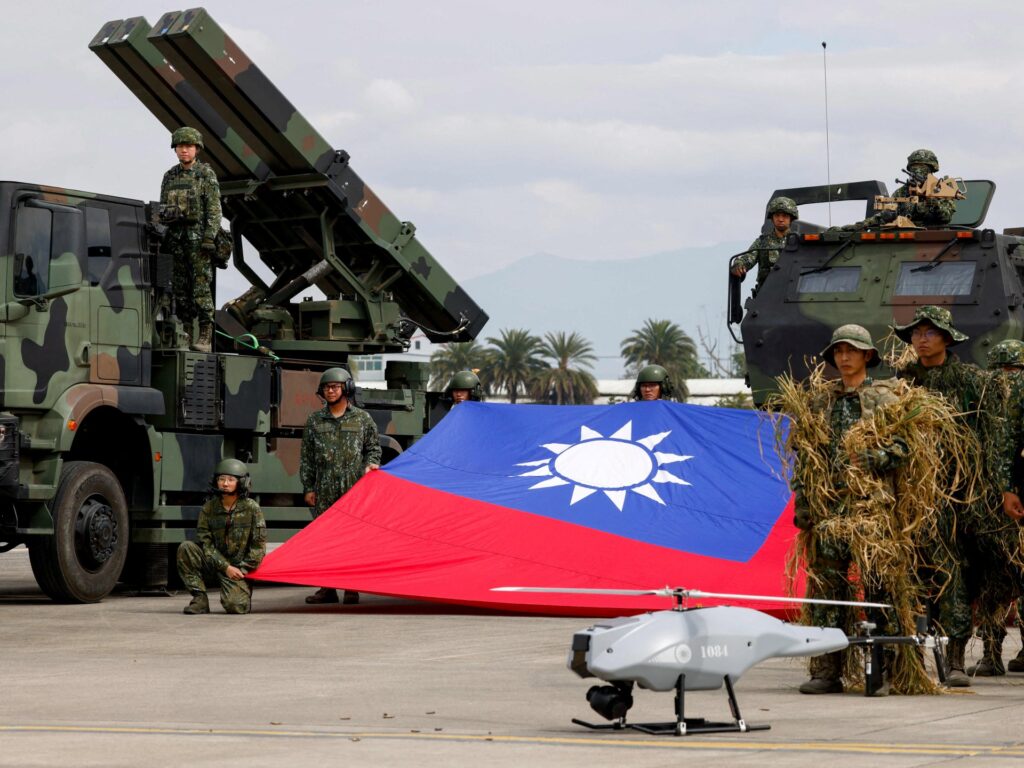
Former U.S. President Donald Trump has announced that he intends to bring up the issue of arms sales to Taiwan during an upcoming meeting with Chinese President Xi Jinping. This topic remains one of the most sensitive and contentious points in U.S.-China relations. The United States has a history of supplying weapons to Taiwan, a democratic island that China claims as part of its sovereign territory under its ‘One China’ policy. Beijing consistently views these arms sales as a violation of its sovereignty and a threat to regional stability.
Trump’s decision to discuss the arms sales signals the ongoing complexity and sensitivity surrounding Taiwan’s status. The U.S. government, under both Republican and Democratic administrations, has sold advanced military equipment to Taiwan as part of its commitment under the Taiwan Relations Act to help the island defend itself. These sales include fighter jets, missiles, and other defense systems aimed at deterring potential aggression from China.
Beijing’s stance is firm; it views Taiwan as a renegade province that must eventually be reunified with the mainland, by force if necessary. The sale of arms to Taiwan by the U.S. is considered by China as interference in its internal affairs and has repeatedly led to diplomatic protests and heightened tensions.
Trump’s meeting with Xi comes at a time when U.S.-China relations have seen multiple strains due to ongoing trade disputes, technology bans, and geopolitical rivalries. The arms sale topic adds an additional layer of complexity to the discussions. Taiwan has increasingly become a focal point in the geopolitical chess game between Washington and Beijing, with concerns about security and regional power balances at the forefront.
Observers note that Trump’s approach could signal a willingness to engage in frank discussions about Taiwan’s defense needs and the broader implications for China-U.S. relations. How China responds will be critical in determining the tone of the meeting and future interactions between the two powers.
The discussion of arms sales during such high-level talks underscores the persistent challenge of balancing U.S. commitments to Taiwan’s security with the need to manage a constructive relationship with China. The outcome of these talks could have significant implications for peace and stability in the Asia-Pacific region, where Taiwan remains a flashpoint.
Overall, Trump’s intention to address arms sales demonstrates the enduring strategic importance of Taiwan in international diplomacy and reflects the complex nature of the U.S.-China relationship.