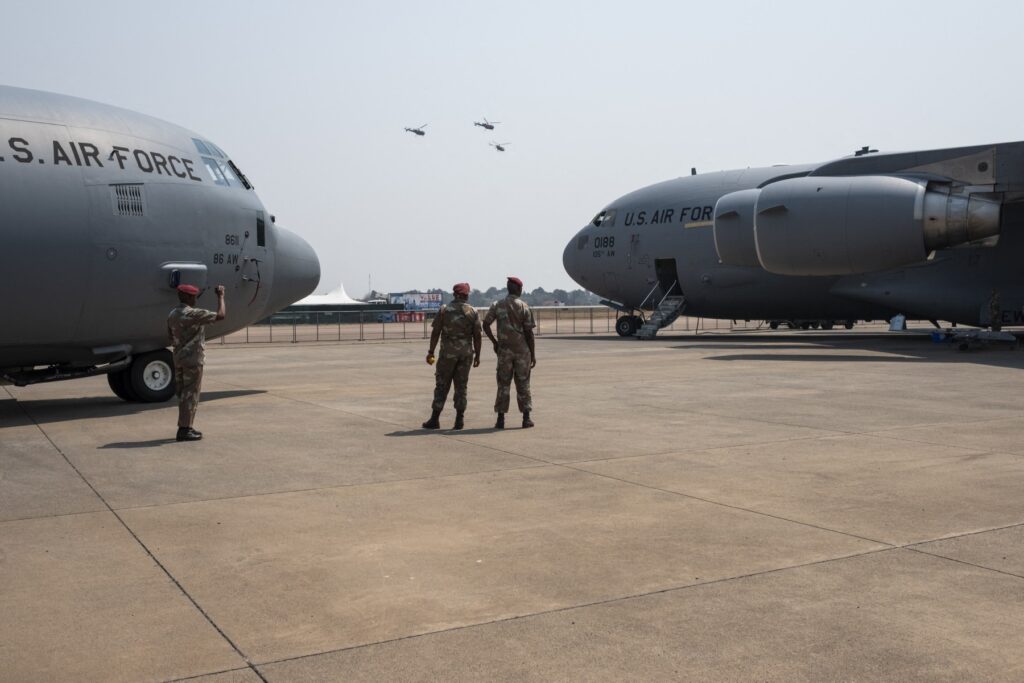
Members from the South African Defence Force stand between US Air Force's C130J Herculus (L) and C17 Globemaster III during the Africa Aerospace and Defence Expo on September 20, 2018, at South Africa's Waterkloof Air Force base, on the outskirts of Pretoria. (Photo by WIKUS DE WET / AFP)
A prominent rights group has initiated legal action against the South African government concerning the export of arms to the United States. The lawsuit challenges the permits that were approved by South Africa’s arms control authority, bringing to light significant concerns about compliance failures and oversight deficiencies in the arms export process.
South Africa faces scrutiny as the rights group alleges the government failed to adequately adhere to national and international arms trade regulations. The case highlights potential gaps in the current oversight mechanisms which are supposed to regulate the approval and monitoring of arms exports.
According to the lawsuit, permits enabling the transfer of arms to the U.S. may have been granted without full adherence to established criteria designed to prevent misuse or unauthorized proliferation of military equipment. The rights group argues that these breaches undermine global arms control efforts and could contribute to increased violence and conflict.
Arms control bodies in South Africa are tasked with ensuring that exports comply with strict legal standards meant to prevent illegal arms transfers and human rights abuses. However, the lawsuit suggests that these bodies have fallen short of their mandate, lacking sufficient transparency and control measures.
The legal challenge seeks to compel the government to review and potentially revoke the permits that were authorized without due diligence. It also calls for enhanced regulatory reforms to tighten oversight of all arms exports moving forward.
Experts in arms control and international law have weighed in on the case, emphasizing the importance of stringent enforcement of export regulations to uphold South Africa’s commitments under global arms treaties. They warn that lax enforcement exposes the country to reputational risks and international criticism.
The South African government has yet to officially respond to the lawsuit publicly, but the case is expected to ignite a broader debate about the nation’s role in the international arms trade, and the ethical considerations surrounding arms exports to countries with complex and multifaceted military engagements.
This legal battle unfolds amid increasing pressure on governments worldwide to ensure arms exports contribute to global peace and security rather than exacerbate conflicts. Rights organizations argue this case sets a precedent for more vigilant scrutiny of arms trade activities, fostering a culture of accountability and adherence to international law.
Advocates for transparency commend the lawsuit, highlighting how civil society participation is crucial for monitoring and holding governments accountable for arms export practices. They underscore the need for clear policies, stringent checks, and public reporting to prevent misuse of military hardware.
As the case proceeds through the courts, it will test South Africa’s legal frameworks around arms control and may influence future policy decisions, potentially leading to more rigorous control systems and greater international cooperation to stem illicit arms flows.
The global community watches closely, recognizing that effective arms trade regulation is a collective responsibility and essential to advancing peace efforts, reducing violence, and protecting human rights worldwide.