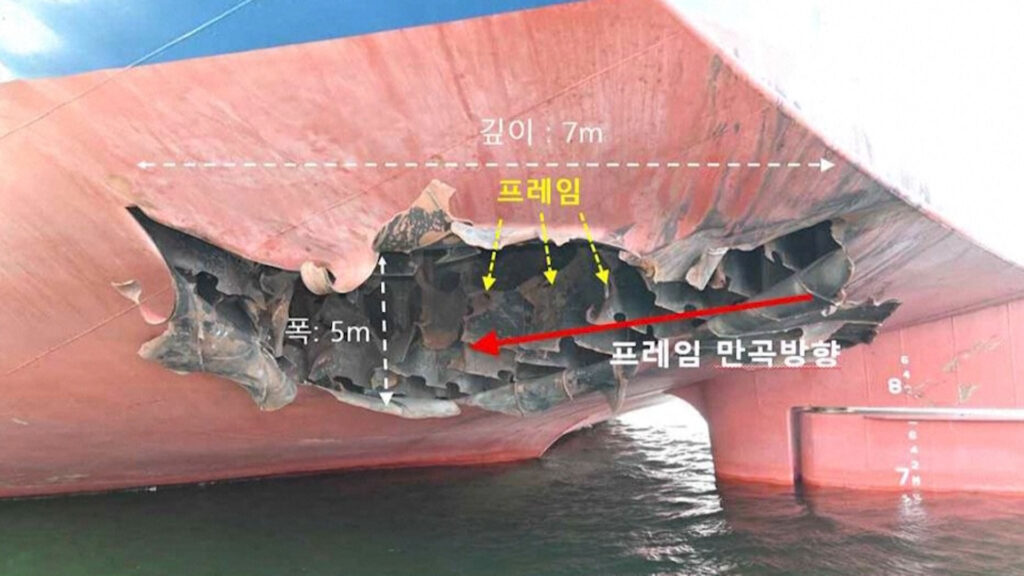
On May 4, a South Korean-operated cargo ship navigating the strategic Strait of Hormuz was struck by two unidentified flying objects, prompting an official investigation by South Korean authorities. The incident has raised international concern, given the critical nature of the Strait of Hormuz, a vital waterway for global oil shipments and international maritime trade.
The South Korean government announced the incident while confirming that the affected vessel is operated by a Korean company, though the ship itself was not South Korean-flagged. The attack involved two objects whose origins and nature remain unclear, leading to careful examination and inquiry into the circumstances surrounding the event.
Officials have not disclosed detailed information about the type of unidentified objects, their size, or the exact locations on the ship that were hit. However, the attack did not result in any casualties, and the ship has not been reported as sinking or severely damaged, allowing it to continue on its route with support from the crew and emergency teams.
The Strait of Hormuz is one of the world’s most crucial chokepoints for oil transit, where nearly one-fifth of the global petroleum passes through daily. This narrow passage between the Persian Gulf and the Gulf of Oman has been a frequent hotspot for geopolitical tensions and maritime incidents, involving regional powers and international navies.
Maritime security experts are closely monitoring the incident, as it could potentially escalate ongoing tensions in the region. The international community is calling for transparency and restraint to avoid further antagonizing the situation, which could have broader implications for global energy markets and international peace.
South Korea’s investigation aims to identify the perpetrators behind the unidentified flying objects and determine their exact motives. Analysts suggest that the attack might relate to the complex political and security dynamics in the Middle East, where numerous state and non-state actors operate.
Diplomatic channels are expected to be active in the coming days, with South Korea coordinating with its allies and relevant international organizations to address the security risks involved. Increased vigilance in maritime routes, especially those critical for energy transportation, will likely follow as part of enhanced security measures.
This incident underscores the persistent challenges faced by merchant shipping in conflict-prone regions and highlights the need for international cooperation to safeguard maritime navigation.
Further updates are anticipated as South Korea progresses with its investigation and as involved parties respond to the situation, emphasizing the importance of maintaining stability in one of the world’s most sensitive maritime corridors.