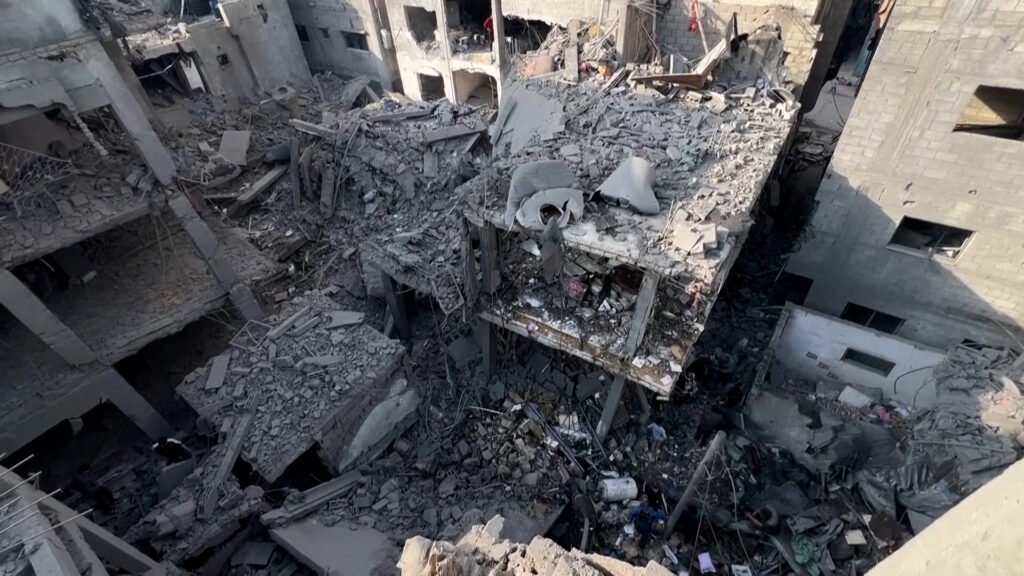
In the aftermath of heavy Israeli airstrikes, residents of Gaza, particularly those in the Al-Shati Refugee Camp, have found themselves returning to scenes of utter devastation. Al Jazeera’s Tareq Abu Azzoum reported from the ground, capturing the stark reality faced by many Palestinians who have nowhere left to flee.
The overnight airstrikes inflicted severe damage on residential areas, leaving homes reduced to rubble and displacing countless families. Al-Shati Refugee Camp, one of the most densely populated areas in Gaza, bore the brunt of these attacks. The destruction has rendered many families homeless, forcing them to grapple with the loss of shelter, belongings, and in some cases, loved ones.
Emergency services and humanitarian organizations have been overwhelmed by the scale of destruction and the urgent need for medical aid, food, and temporary shelter. Despite international calls for ceasefire and humanitarian corridors, the situation remains critical as further airstrikes loom.
Residents, many of whom have experienced repeated rounds of violence, expressed a profound sense of despair. “There is nowhere left to go,” one resident lamented, highlighting the dire predicament faced by civilians caught in the crossfire.
The destruction of infrastructure, including water and electricity supplies, has compounded the crisis. Hospitals and clinics are operating under extreme conditions, struggling to provide care amidst shortages of medical supplies and equipment.
The broader context of the conflict underscores the ongoing cycle of violence and retaliation between Israel and Palestinian factions in Gaza. The international community continues to urge both sides to return to dialogue and prioritize the protection of civilians.
As Gaza residents sift through the rubble of their shattered neighborhoods, the humanitarian toll becomes increasingly apparent. The resilience of the community is being tested, with many calling for urgent global attention and assistance to rebuild lives and restore hope.
The situation in Gaza remains fluid and precarious, with the potential for further escalation posing a dire threat to peace and stability in the region.