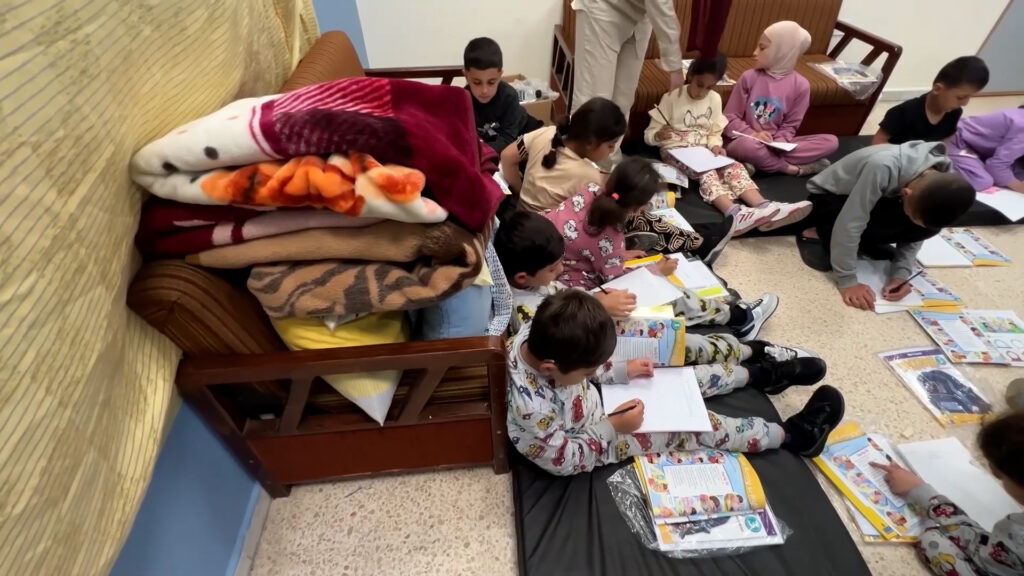
In the southern Lebanese city of Sidon, a school has transformed from a traditional educational institution into a temporary refuge for displaced families fleeing conflict zones. Despite the challenging circumstances and the influx of displaced persons, the school has admirably kept its doors open for education, ensuring that children continue to learn and grow even amid great hardship.
The displaced families, primarily from the southern regions of Lebanon where clashes and instability have uprooted normal life, have found shelter within the school’s walls. This dual use of the school space reflects the pressing needs in this conflict-affected area and the community’s resilience in adapting to unprecedented situations.
Children living in displacement often face numerous obstacles that can disrupt their schooling—from the trauma of losing their homes and loved ones to the instability of their new environments. Yet, in Sidon, educators and volunteers are working tirelessly to maintain a semblance of normalcy by continuing classes within the facility. This effort underscores the critical role education plays in providing stability and hope for young minds during crises.
The local education authorities and NGOs have collaborated to ensure the provision of learning materials and the modification of curricula to suit the displaced children’s needs. Classes cover a range of subjects to keep students on track with their studies, despite the international and local difficulties surrounding the conflict and displacement.
Parents, despite the hardships they face, have expressed their gratitude for the continued education opportunities. For many, the school is not only a place of learning but also a beacon of safety and community support that nurtures their children’s emotional and intellectual development.
Moreover, teachers have adapted teaching methods to be more sensitive to the psychological and emotional needs of children affected by displacement. Psychosocial support is integrated within the school programs to help children cope with uncertainty and trauma.
The story of this school in Sidon is a testament to the resilience of Lebanese communities and the importance of education during displacement. It highlights the collective efforts made by families, educators, and humanitarian organizations to keep children hopeful and forward-looking.
This situation also sheds light on the broader challenges facing displaced populations in Lebanon. With increasing numbers of internally displaced families, the pressure on public infrastructure, including schools and housing, continues to grow. Innovative solutions like using schools as multi-purpose facilities have become essential.
The Sidon school’s example encourages further support from international aid agencies and governments to sustain educational services and expand support for displaced children across Lebanon. Access to consistent education not only enriches children’s futures but also contributes to community resilience and long-term recovery.
In conclusion, despite the trials imposed by displacement, the continuity of education in Sidon offers a beacon of hope and demonstrates the unwavering spirit of Lebanese communities to prioritize learning and growth for their children amidst adversity.