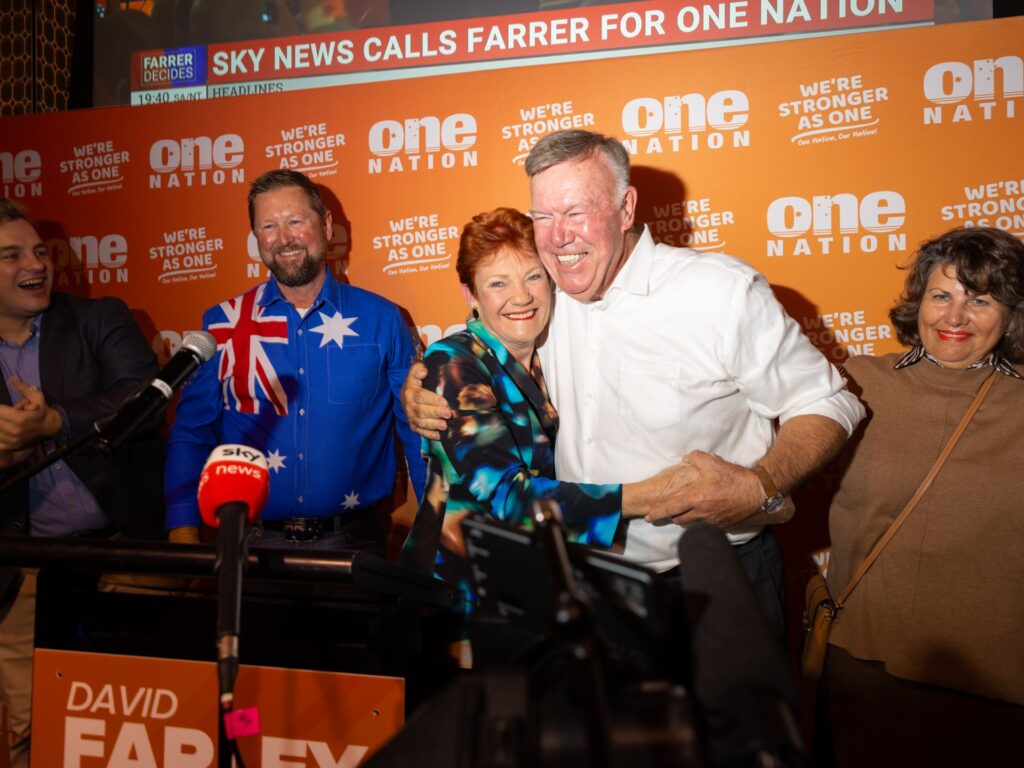
In a landmark political event, Australia’s One Nation party, known for its populist and far-right stance, has secured its first-ever victory in the country’s lower house of parliament. The winning candidate, David Farley, achieved a significant milestone for the party, marking a new chapter in Australian politics.
David Farley, representing One Nation, has been a vocal advocate for policies centered on stricter migration controls and reforms in the agricultural sector. His campaign resonated with voters who are concerned about issues such as immigration policy, national sovereignty, and support for farmers facing economic pressures.
One Nation, founded in 1997 by Pauline Hanson, has traditionally held a controversial position in Australian politics, often criticized for its hardline views on immigration and multiculturalism. Despite this, the party has gradually built a dedicated voter base, particularly in regional and rural areas where concerns about economic and social changes are pronounced.
Farley’s win signifies not only a boost in legitimacy for One Nation but also reflects a broader shift in some segments of the Australian electorate towards populist platforms. This victory may influence the political discourse, prompting major parties to address issues raised by One Nation to avoid losing further support.
The stricter migration policies advocated by Farley focus on tighter border security and more rigorous vetting processes for immigrants. This stance appeals to voters worried about the social and economic impacts of immigration.
On the farming front, Farley has pushed for reforms aimed at supporting local farmers, including measures to improve sustainability, increase financial assistance, and reduce regulatory burdens. The agricultural sector, a vital part of Australia’s economy, has faced numerous challenges from climate change, market fluctuations, and global competition.
Political analysts suggest that One Nation’s success in winning a lower house seat could pave the way for increased representation in the future, potentially shifting the parliamentary balance. It highlights growing divisions within Australian society over identity, economics, and governance.
Critics warn that One Nation’s policies risk fostering division and xenophobia, while supporters argue that the party is giving a voice to those who feel ignored by mainstream politics. The outcome of this election result will be closely watched as it unfolds the potential impact on national policies and social cohesion.
As David Farley takes his seat in the parliament, the coming months will be crucial in determining how effectively One Nation can translate its populist rhetoric into legislative action. The party’s presence in the lower house could herald new debates and policy directions concerning immigration management and agricultural reforms.
This historic victory for One Nation underscores the dynamic and sometimes turbulent nature of democratic politics in Australia, reflecting changing voter priorities and the evolving landscape of political representation.