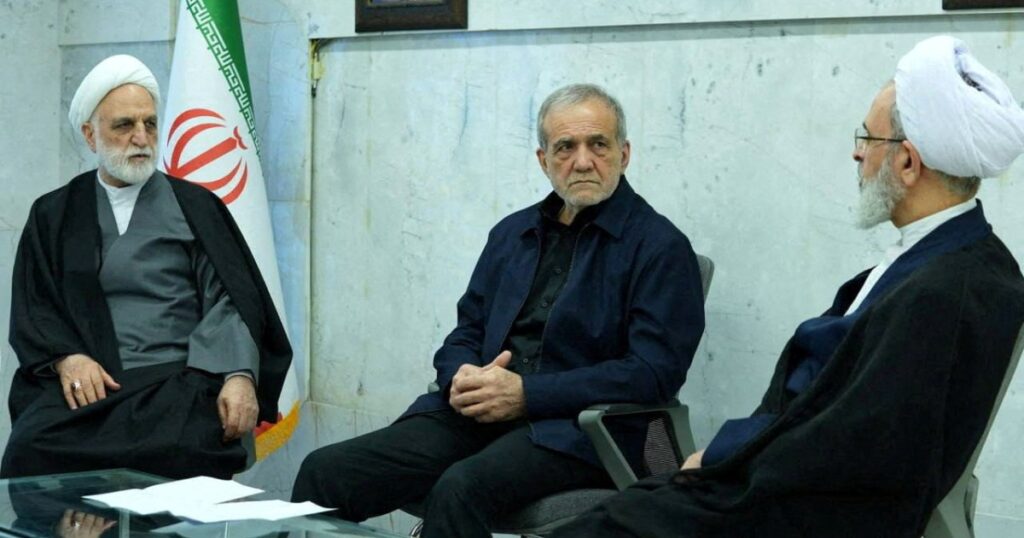
In the face of mounting pressure from Washington over disputes in the strategically critical Strait of Hormuz, Iran’s President Pezeshkian has publicly sought to dispel narratives suggesting divided leadership within the country’s top echelons.
Tehran has been under significant international scrutiny recently, particularly from the United States, which has accused Iran of destabilising maritime security in the Strait of Hormuz, a vital corridor for global oil shipments. These accusations have amplified tensions in the region and sparked fears of broader conflict.
President Pezeshkian addressed these concerns head-on, emphasising the solidarity and unified stance among Iran’s highest-ranking officials. He categorically rejected claims insinuating that internal divisions might hamper Iran’s response strategies or foreign policy.
According to Pezeshkian, the leadership is aligned on key national security issues, particularly regarding the country’s stance on the Strait of Hormuz disputes. He underscored that Iran remains committed to protecting its sovereignty and regional interests, standing firm against external pressures.
This message is significant as it counters any perception of instability or conflicting approaches within Iran’s government, which could be exploited by adversaries during times of heightened geopolitical strain. The President’s insistence on unity is intended to project strength and convey that Iran’s policies are coherent and consistently applied.
The Strait of Hormuz, through which an estimated 20% of the world’s petroleum passes, has always been a flashpoint for international security concerns. Recent incidents, including tanker seizures and accusations of aggressive maneuvers, have exacerbated an already volatile situation.
In response to U.S. sanctions and military presence, Iran’s leadership has vowed to maintain free navigation while also asserting their right to defend their territorial waters vigorously. The consolidation of leadership viewpoints seeks to reassure both domestic and international audiences of Iran’s stability.
Observers note that this proclaimed unity could serve as a deterrent against further escalatory actions by adversarial states, as a fragmented leadership might invite miscalculations.
While critics argue that some policy disagreements may exist behind closed doors, the official narrative remains focused on projecting coherent governance and resilience amid external challenges.
President Pezeshkian’s statements come at a time when diplomatic efforts to ease tensions have thus far seen limited success. His administration continues to advocate for dialogue but remains steadfast in protecting Iran’s interests.
In sum, the President’s attempt to quash the divided leadership narrative is a strategic move to present a formidable front, maintaining national unity as Iran navigates complex regional dynamics and international pressure, particularly in the sensitive Strait of Hormuz area.