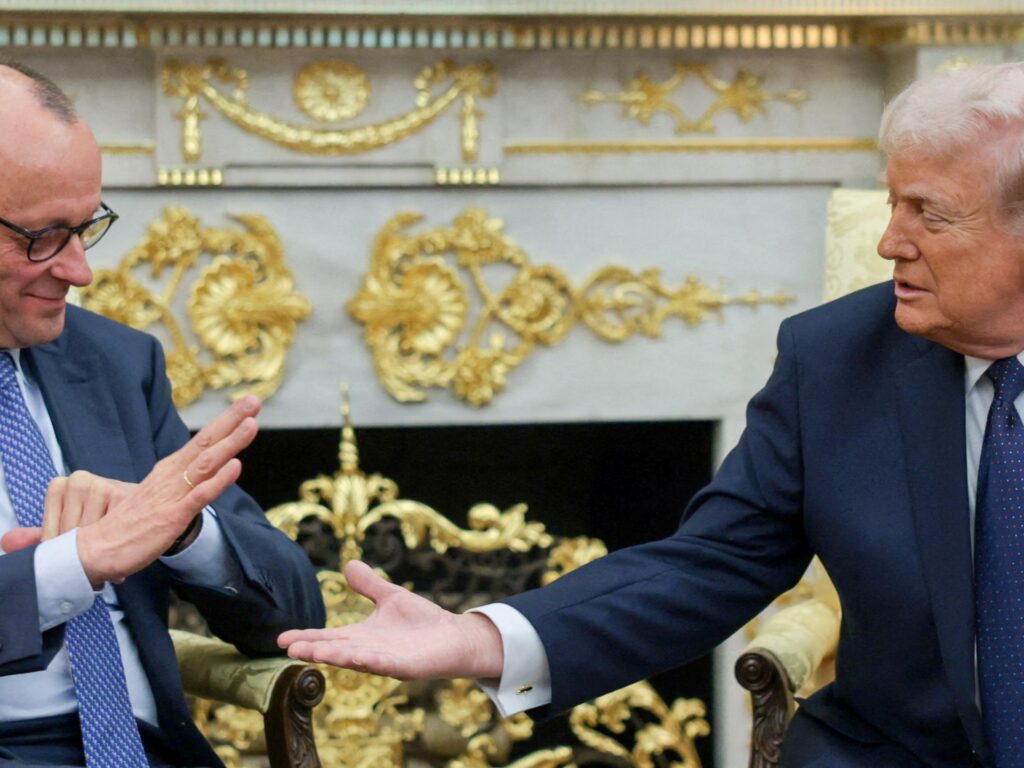
The ongoing war in Iran has significantly strained the relationship between the United States and Germany, revealing deeper fissures in their transatlantic alliance. A German official recently described the situation as ‘a stress test,’ highlighting how the prolonged conflict is testing the durability and solidarity of US-Europe ties.
The rift stems from differing policies and approaches toward the Iran conflict, with Berlin diverging from Washington’s strategies and rhetoric. This divergence has sparked heated debates within Germany, where an opposition Member of Parliament (MP) explicitly stated that Berlin is ‘not neutral,’ signaling internal disagreements about how to position Germany on the global stage in this conflict.
For decades, US-Germany relations have been a cornerstone of Western geopolitical stability, centered on cooperation in defense, economics, and diplomacy. However, the uncertainty and complexity of the Iran war have exposed cracks, revealing conflicting national interests and differing diplomatic priorities.
The German official’s comments underscore the pressures the alliance is facing. The US expects European allies, including Germany, to take a firmer stance against Iran. Conversely, Germany’s approach appears more cautious, prioritizing diplomacy and regional stability over direct confrontation.
This nuanced position has led to frustration in Washington, where some perceive Germany’s stance as a lack of commitment or solidarity. Meanwhile, in Berlin, there is a growing concern about getting entangled in a conflict that could escalate dangerously and destabilize an already volatile region.
The opposition MP’s remarks about Germany ‘not being neutral’ add another layer of complexity. They point to a domestic debate over the country’s foreign policy direction, where one side advocates for a more assertive role aligned with US policies, while others push for restraint and neutrality to avoid direct involvement in the war.
The war in Iran has also reignited broader discussions about the future of US-European cooperation in a multipolar world. Germany, along with other European nations, is increasingly cautious about aligning too closely with US foreign policy, seeking a more independent and balanced approach.
Experts warn that if these tensions are not managed carefully, they could lead to long-term damage to one of the West’s most important alliances. The balance between solidarity and sovereignty is delicate, and both the US and Germany must navigate these challenges thoughtfully.
In conclusion, the ongoing Iran conflict has become more than just a regional war; it is a critical juncture testing the US-Germany relationship. Both nations face the challenge of maintaining a united front while respecting their differing perspectives and domestic pressures. The outcome of this ‘stress test’ will have profound implications for transatlantic relations and global diplomacy moving forward.