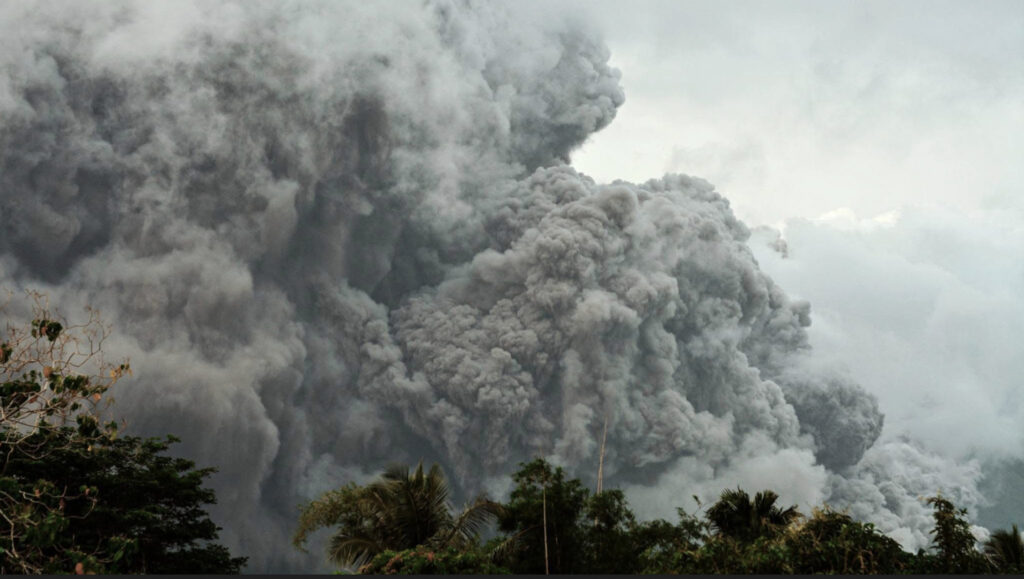
The Mayon Volcano, one of the most active volcanoes in the Philippines, has erupted, sending a thick cloud of ash and volcanic debris over the Bicol region. The eruption has sparked concerns among local residents and authorities due to the potential hazards posed by falling ash and the possibility of further volcanic activity.
Located in the province of Albay, Mayon Volcano is renowned for its near-perfect conical shape, attracting tourists and researchers alike. However, its frequent eruptions are a reminder of the region’s vulnerability to volcanic hazards. The recent eruption began suddenly, releasing a plume of ash that quickly spread across the skies, darkening the area and causing poor visibility.
Officials from the Philippine Institute of Volcanology and Seismology (PHIVOLCS) have issued warnings urging residents to stay indoors and prepare for possible evacuation. Ash fall can cause respiratory problems, contaminate water supplies, and damage crops, prompting health and agriculture agencies to take precautionary measures.
Emergency services remain on high alert, monitoring the volcano’s activity continuously. Nearby communities have been advised to wear masks to protect against ash inhalation and avoid outdoor activities until the situation stabilizes. Schools in affected areas have also been temporarily closed to safeguard the health of students.
Historically, Mayon Volcano has had several major eruptions, with the most devastating occurring in 1814, which buried the town of Cagsawa under lava and ash. The current eruption serves as a stark reminder of the volcano’s destructive potential and the need for preparedness in the region.
Local government units are coordinating with national disaster agencies to provide assistance and relief to affected populations. Efforts include distributing food, water, and emergency supplies to evacuation centers established for displaced residents.
Environmental experts are advising that residents stay informed through reliable news sources and official announcements to receive timely updates on the volcano’s activity. They also recommend avoiding river valleys and low-lying areas that might be susceptible to lahars—dangerous volcanic mudflows triggered by eruptive materials mixing with heavy rainfall.
The eruption has also temporarily grounded some flights in the area due to poor visibility and ash accumulation on runways, impacting travel and transport.
As the situation develops, scientists and government agencies will continue to assess the eruption’s scale and effects, providing guidance on safety measures. The resilience of the Bicol community is being tested, but with coordinated efforts, the impact can be managed to minimize harm and foster quick recovery.
In conclusion, the Mayon Volcano eruption is a significant geological event affecting the Philippines, highlighting the importance of vigilant disaster preparedness and community cooperation. Residents and authorities alike remain watchful, hoping for a swift end to the eruption and a return to normalcy in the affected regions.