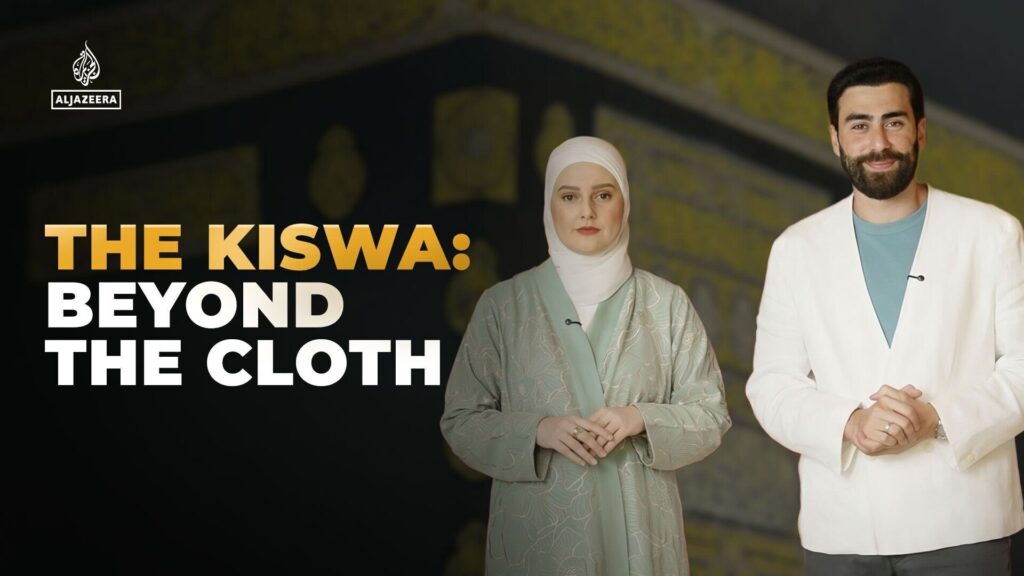
Every Muslim on earth has encountered the Kiswa during prayer, and countless billions have seen its striking image in photographs and videos. Yet, almost nobody is fully aware of the deep history and cultural significance that lies beyond this sacred cloth.
The Kiswa is the black cloth that covers the Kaaba, Islam’s holiest site located in the Masjid al-Haram in Mecca, Saudi Arabia. The Kaaba is the focal point of Muslim prayer; all Muslims around the world face towards it during Salah, their daily prayers. The Kiswa therefore holds a unique spiritual and symbolic importance that transcends its physical nature.
Historically, the tradition of covering the Kaaba dates back centuries. Early Muslim chronicles suggest that the Prophet Muhammad himself covered the Kaaba, setting a precedent for successive Muslim rulers who took on the honor and responsibility of preparing and draping the Kiswa.
The cloth itself is made of pure black silk and richly embroidered with Quranic verses in gold and silver thread. Its creation is a meticulous process that involves skilled artisans dedicated solely to producing the Kiswa. Typically, the Kiswa is replaced annually during the Hajj pilgrimage season, symbolizing renewal and reverence.
The Kiswa’s significance extends beyond its material value. To Muslims, it represents the unity of the Ummah (the global Muslim community), a symbol of submission and devotion to Allah. The cloth acts as a reminder of the sanctity of the Kaaba and the spiritual journey undertaken by millions of pilgrims each year.
Despite its importance, many remain unaware of the people behind the Kiswa — the craftsmen who pass down their skills through generations, ensuring the preservation of traditional techniques. The workshop where the Kiswa is made operates under strict supervision and holds great respect within Saudi society.
The cloth also embodies several symbolic layers. Its color black is often interpreted as a representation of humility and modesty, while the gold embroidery signifies illumination and divine guidance. The Quranic verses inscribed convey messages of faith, mercy, and worship, inviting believers to reflect on their spiritual connection.
In modern times, the Kiswa has been subject to remarkable preservation efforts. Portions of the old cloth are carefully saved and sometimes gifted to prominent dignitaries or displayed in museums, ensuring that the heritage of the Kiswa remains accessible for future generations.
Understanding the Kiswa’s story enriches one’s appreciation of the rituals surrounding the Kaaba, the Hajj pilgrimage, and the Islamic faith as a whole. What may appear as a simple piece of cloth is, in reality, a profound emblem of faith, history, and unity.
Every glance at the Kiswa during prayer, every image carried across the world, is a connection to centuries of devotion, artistry, and communal identity. The Kiswa truly is more than just a covering — it is a living symbol that continually inspires and unites Muslims globally.