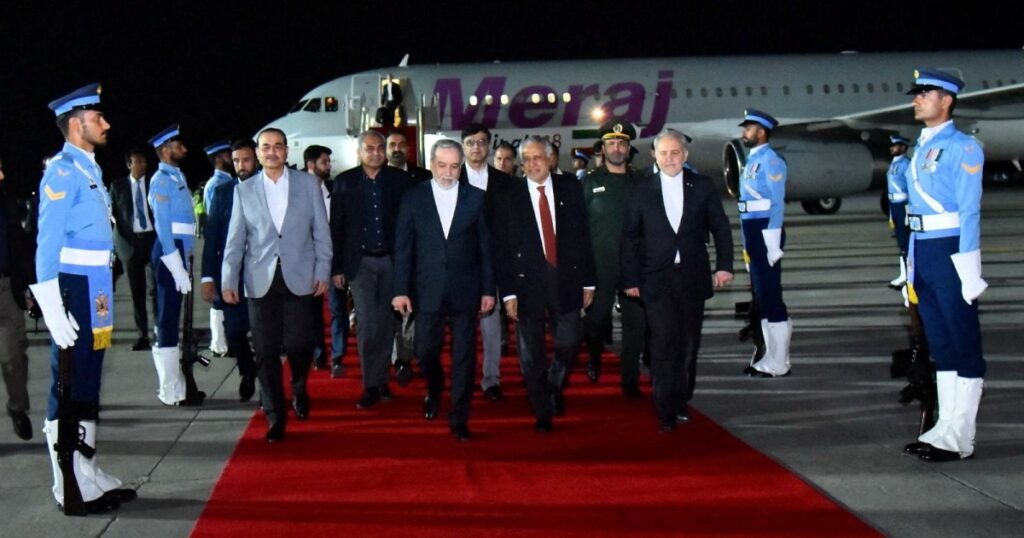
On the 57th day of the conflict involving Iran, significant diplomatic movements are underway as the US sends envoys Steve Witkoff and Jared Kushner to Pakistan. This comes at a time when Iran’s Foreign Minister Abbas Araghchi has also arrived in Islamabad, indicating a critical diplomatic engagement in the region.
The ongoing war has escalated tensions in the Middle East, drawing international attention and prompting urgent diplomatic interventions. The travels of US envoys to Pakistan highlight the increasing involvement of neighboring countries in efforts to mediate the conflict and prevent further escalation.
Steve Witkoff and Jared Kushner, both experienced in international diplomacy, have been tasked with engaging Pakistani leaders to discuss potential pathways to peace and regional stability. Their mission underscores the strategic importance of Pakistan given its geographical proximity to Iran and its influence in South Asian geopolitics.
Meanwhile, Abbas Araghchi’s arrival in Islamabad reflects Iran’s intention to maintain strong diplomatic ties and possibly seek support or at least a neutral stance from Pakistan amidst the war. Islamabad’s role is pivotal, as it can act as a mediator between conflicting parties or a safe conduit for communication.
The 57-day conflict has seen numerous military and civilian casualties, disrupting life and economies across the affected regions. International bodies have called for ceasefires and negotiations, but tangible progress has been limited.
Pakistan’s diplomatic engagement, with both American envoys and Iranian officials present concurrently, might open channels for dialogue that could de-escalate tensions. However, the path to peace remains complex, reliant on multifaceted diplomatic efforts and broader regional cooperation.
This phase of the conflict illustrates the intertwined nature of Middle Eastern and South Asian politics. The US envoy’s visit to Pakistan is part of a broader international strategy to manage the fallout of the war through negotiation and alliance-building.
Observers remain cautious but hopeful that these diplomatic missions signify a step toward restraint and dialogue, avoiding a prolonged and devastating confrontation. The international community continues to monitor developments closely, emphasizing the urgency of peaceful resolutions to prevent further regional instability.