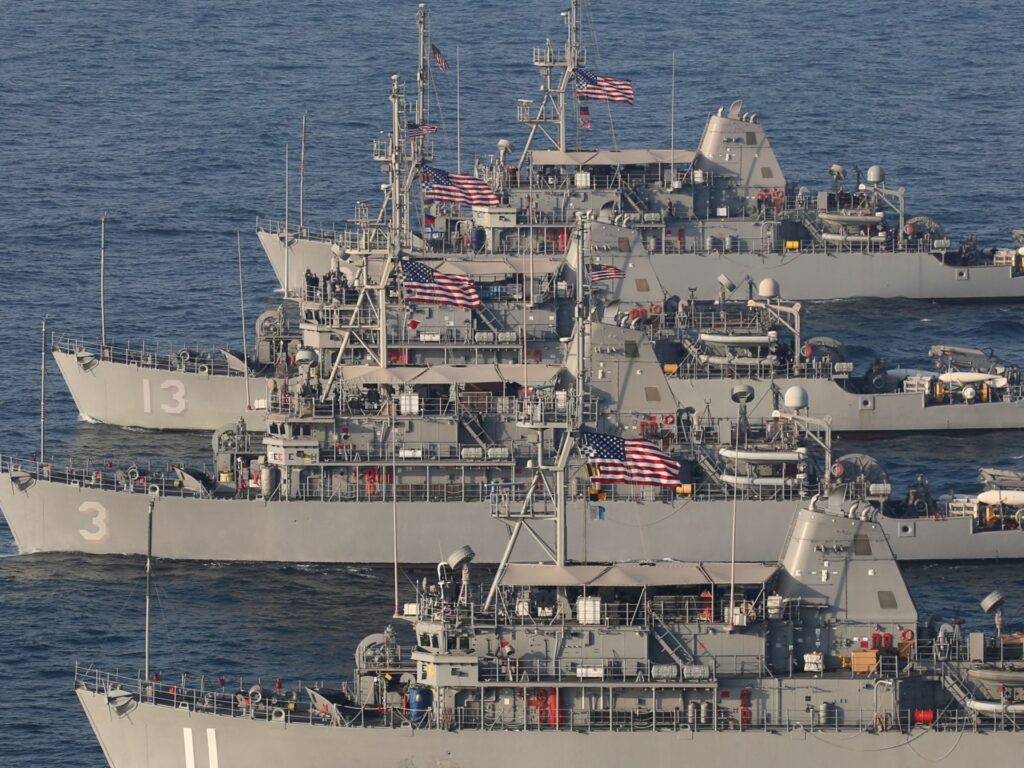
In recent developments surrounding tensions in the Persian Gulf, a US general has clarified the scope of the current US military blockade against Iran. Contrary to some reports and public speculation, the US forces are blockading only specific Iranian ports and not the entire Strait of Hormuz.
The Strait of Hormuz is a strategically vital waterway for global oil transit, linking the Persian Gulf with the Gulf of Oman and the Arabian Sea. It is one of the world’s most critical chokepoints for energy supplies, with a significant percentage of the world’s oil shipments passing through it daily. Any disruption in this narrow maritime route could have far-reaching implications for global energy markets and international trade.
The general emphasized that the US blockade targets Iranian ports to exert economic and military pressure on Tehran without disrupting broader maritime navigation in the Strait of Hormuz. This distinction aims to balance strategic military goals with the necessity of maintaining the free flow of commerce and energy resources vital to global markets.
Officials explained that the blockade is part of a broader strategy seeking to curb Iran’s regional influence and stop activities deemed destabilizing by the United States. This includes efforts to limit Iran’s military capabilities, restrict its arms shipments, and pressure it over its nuclear program and missile development activities.
The clarification from the US military leadership comes amid heightened regional tensions and concerns from other nations about the safety and security of navigation through the Strait of Hormuz. Several countries, including US allies and international shipping companies, have expressed worry about potential escalation that could interrupt maritime traffic.
Economists and energy security experts have closely monitored the situation, noting that a blockade of the entire Strait would have severe consequences on oil prices and supply chain stability worldwide. The general’s statement helped to dispel fears of an all-encompassing naval blockade that could trigger a major crisis in global energy markets.
While the current US military stance focuses on blockading Iranian ports specifically, the situation remains dynamic and subject to change depending on geopolitical developments. Diplomacy efforts continue alongside military measures to deescalate tensions in the region.
The clarification also underscores the importance of precise communication during conflict situations, especially in regions as sensitive as the Persian Gulf where misunderstandings can escalate quickly.
This development is likely to impact regional diplomacy, as neighboring countries and global powers closely watch the evolving US-Iran relations. The balance between military pressure and maintaining maritime open routes will remain a critical challenge moving forward.
In summary, while the US military is enforcing a blockade on Iranian ports to counteract policies and actions by Tehran, it currently does not extend to the entire Strait of Hormuz, thus seeking to avoid wider disruption to international maritime traffic and energy supplies.