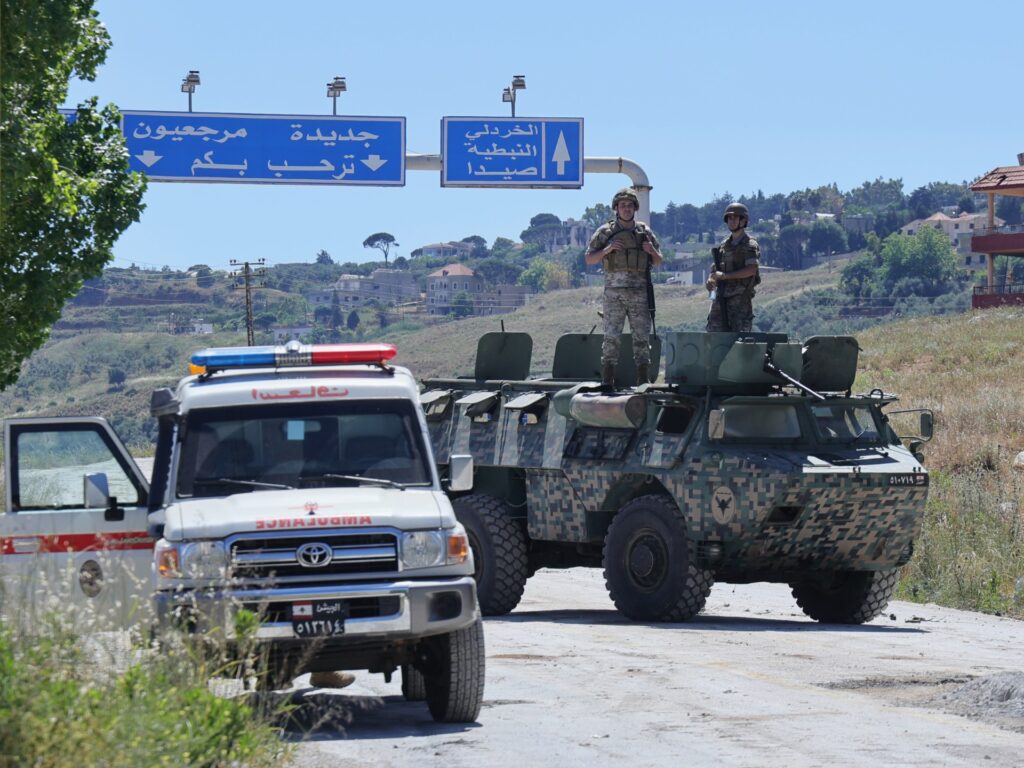
The ongoing conflict involving Iran’s proxy, Hezbollah, and Israel continues to intensify as Hezbollah firmly rejects any truce proposals amid escalating Israeli military operations in Lebanon. The situation remains volatile as Israeli airstrikes persist throughout Lebanon, targeting Hezbollah positions and infrastructure.
Hezbollah’s outright rejection of a ceasefire signals a prolonged confrontation, with potential implications for regional stability. The group’s leadership has expressed a steadfast commitment to countering Israeli incursions, emphasizing their readiness to sustain military engagement.
Meanwhile, significant legal developments have unfolded within Israel. In a notable decision, Israel’s Supreme Court annulled the government’s previous ban on international Red Cross representatives visiting Palestinian prisoners held in Israeli jails. This landmark ruling restores the humanitarian organization’s access, allowing monitoring of detention conditions and upholding international standards for prisoner treatment.
The ban, initially imposed citing security concerns, had sparked widespread criticism from human rights organizations and international observers, who viewed it as a violation of detainees’ rights and humanitarian norms. The court’s decision underscores the judiciary’s role in balancing security imperatives with human rights obligations.
The dual developments—the ongoing military strife between Hezbollah and Israel and the judicial ruling on Red Cross prison visits—highlight the complex and multifaceted nature of the conflict. While military confrontations continue to escalate on one front, steps toward safeguarding humanitarian rights emerge on another.
Analysts warn that Hezbollah’s refusal to accept a truce may lead to prolonged hostilities, potentially dragging neighboring countries into the conflict and exacerbating the humanitarian crisis in the region. Israel’s continued airstrikes aim to dismantle Hezbollah’s military capabilities but risk further inflaming tensions and civilian suffering.
The international community watches closely, urging restraint and dialogue to prevent further escalation. Calls for an immediate ceasefire and renewed peace negotiations persist amid fears of a wider regional war.
In parallel, the Israeli Supreme Court’s ruling has been welcomed by international human rights groups, who praise the decision as a step toward greater transparency and accountability in detention practices. The Red Cross is expected to resume its visits soon, providing independent oversight and reporting on the conditions faced by Palestinian prisoners.
This development brings hope for improved treatment of detainees and the protection of their rights, even as broader conflict rages in the region.
In summary, the current landscape presents a stark juxtaposition: on one side, relentless military engagement marked by Hezbollah’s refusal to cease hostilities and ongoing Israeli airstrikes in Lebanon; on the other, judicial progress facilitating humanitarian oversight for Palestinian prisoners in Israeli custody. The coming days and weeks will be critical in determining whether these parallel narratives evolve toward escalation or resolution.