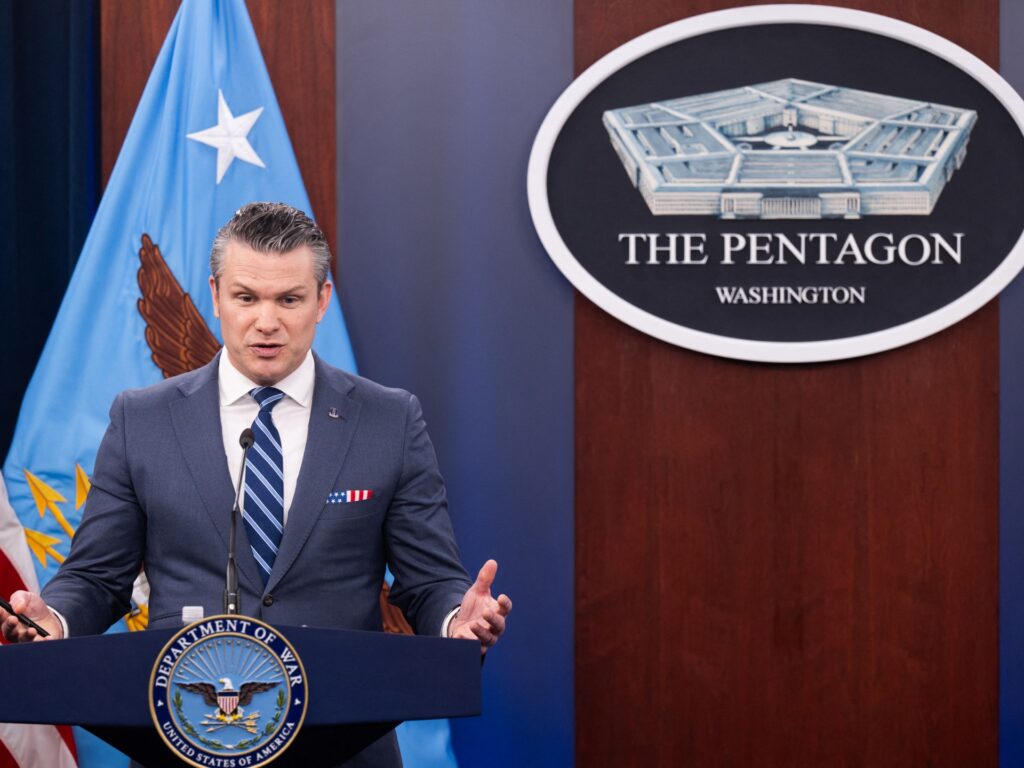
In a recent statement that underscores ongoing tensions in the Middle East, Pentagon chief Hegseth has warned that the blockade imposed on Iran could last “as long as it takes.” His remarks signal a firm and unyielding stance by the United States amid escalating geopolitical challenges in the region.
The blockade, primarily aimed at restricting Iran’s ability to conduct certain international operations, represents a significant effort by the U.S. to exert pressure on the Iranian government. Washington’s justification for the blockade focuses on curbing Iran’s nuclear ambitions and limiting its influence in the Middle East.
Despite these strong measures, the U.S. continues to articulate a preference for resolving the conflict through diplomatic means. Officials have repeatedly urged dialogue and negotiations, emphasizing the importance of talks as a pathway to de-escalation and peaceful resolution.
However, in a clear signal of readiness, Pentagon chief Hegseth indicated that Washington remains “locked and loaded” to resume military attacks if deemed necessary. This dual approach—pursuing diplomatic talks while maintaining a strong military posture—reflects the complex strategic calculus of the U.S. administration.
Analysts point out that this combination of deterrence and diplomacy is intended to communicate resolve to Tehran while leaving the door open for peaceful conflict resolution. “It’s a message that the U.S. is serious about its demands but remains open to negotiations if Iran responds positively,” said a Middle East security expert.
Meanwhile, Iran has vehemently condemned the blockade, describing it as an illegal and aggressive act. Iranian officials warn that the blockade will have severe consequences for regional stability and threaten international trade routes critical for global energy supplies.
The international community remains watchful, with many countries advocating for dialogue and restraint. The blockade has caused disruptions that affect not only Iran but also neighboring countries and global markets.
Global powers have called for calm and urged all parties to engage in constructive conversations to prevent further escalation. The United Nations has reiterated the need for adherence to international laws and the avoidance of actions that could inflame regional conflicts.
In summary, the situation remains precarious with the Pentagon chief publicly stating that the blockade on Iran will continue for “as long as it takes.” The U.S. strategy combines a persistent blockade with a readiness for military action, while simultaneously promoting talks as a means to resolve the standoff. The world watches closely, hoping for a peaceful outcome to a crisis with potentially wide-ranging implications for regional and global security.