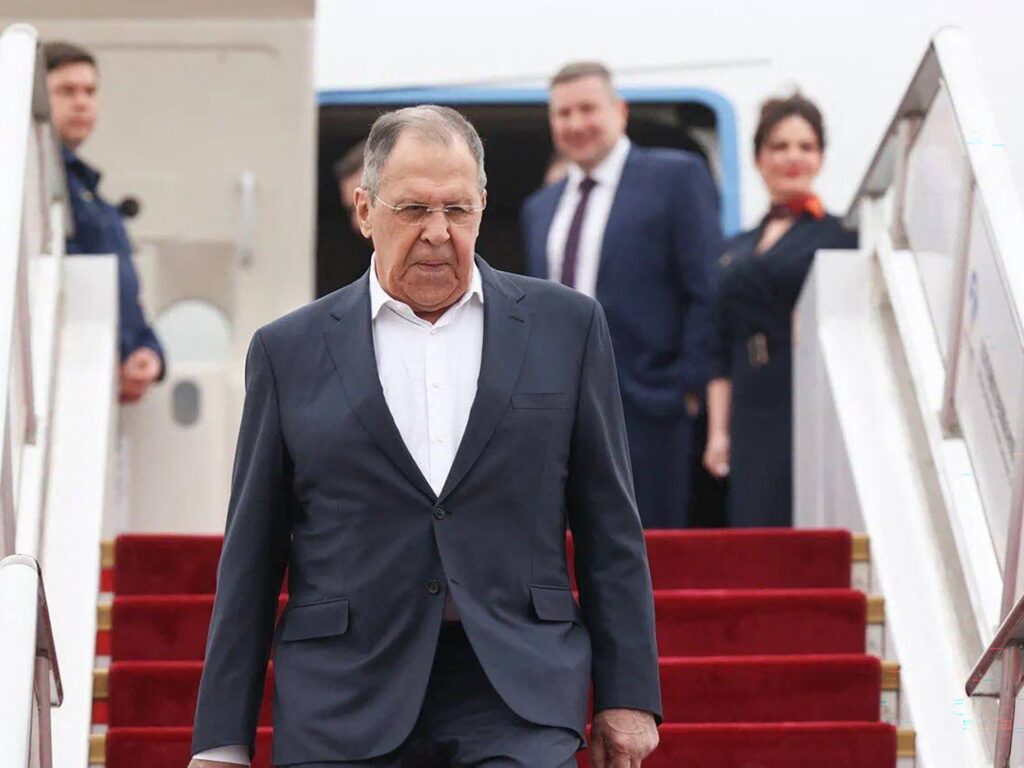
In a striking development amid growing global tensions, Russian Foreign Minister Sergey Lavrov has made a significant visit to China as the United States intensifies its pressure on Iran through a blockade in the strategically crucial Strait of Hormuz. This visit is indicative of the close coordination and solidarity between China and Russia in response to the escalating conflict involving the US and its allies.
The backdrop to this diplomatic engagement is the US-Israel confrontation with Iran, a key ally of both China and Russia. The US has been mounting a campaign of diplomatic and military pressure targeting Iran, including imposing restrictions on maritime traffic in the Strait of Hormuz, a vital artery for global oil exports. This blockade has intensified fears of disruption to global energy supplies and has triggered a robust response from Iran and its allies.
China and Russia have emerged as vocal critics of what they perceive as aggressive and destabilizing actions by the US and Israel towards Iran. Both countries regard Iran not only as a strategic partner but also as a vital element of their broader geopolitical strategy to counterbalance US influence in the Middle East.
Lavrov’s visit to Beijing is seen as an effort to coordinate a unified approach to the crisis. The discussions between Moscow and Beijing are expected to address not only the immediate issue of the Hormuz blockade but also long-term strategies for economic and military cooperation with Iran. Both nations emphasize the importance of respecting sovereignty and international law, condemning unilateral sanctions and military interventions.
This diplomatic maneuvering occurs in the context of expanding partnerships among non-Western powers aiming to reshape global alliances. China’s robust economic ties with Iran, particularly in energy and infrastructure, parallel Russia’s military and strategic cooperation, making their backing critical for Tehran.
Analysts suggest that the joint stance by China and Russia could complicate US efforts to isolate Iran internationally. The backing of these global powers could provide Iran with the political cover and economic avenues necessary to withstand sanctions and military pressure.
Furthermore, the situation in the Strait of Hormuz exemplifies how regional conflicts have significant global implications. The potential disruption of oil shipments threatens to unsettle global markets and underscores the fragility of international trade routes dependent on political stability.
International actors have called for dialogue and restraint to prevent the escalation of conflict, highlighting that a peaceful resolution is indispensable for maintaining stability in the Middle East and beyond.
In summary, Lavrov’s visit to China amid the US’s strategic pressure on Iran via the Hormuz blockade underscores the emerging multipolar world order. It reflects the strengthening alliances among Russia, China, and Iran as they collectively challenge US dominance. The situation remains fluid, with international repercussions that could redefine global geopolitical dynamics in the coming months.