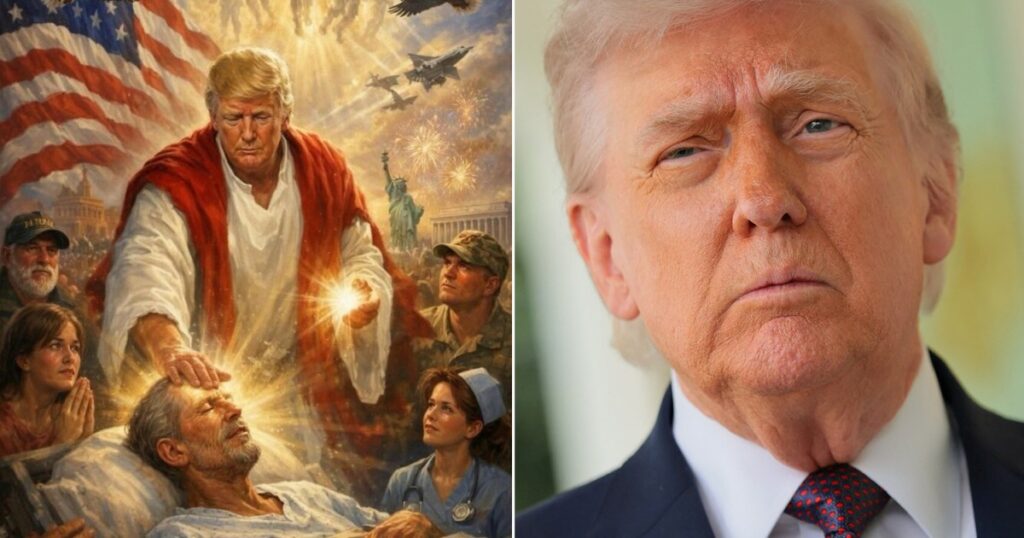
Former U.S. President Donald Trump recently deleted an AI-generated image portraying himself in a Jesus-like manner, following widespread criticism from church leaders, conservatives, and the general public. The image, which depicted Trump as a religious savior, sparked outrage for its perceived blasphemous tone and self-aggrandizement.
The AI-generated portrayal seemed to evoke imagery reminiscent of traditional Christian depictions of Jesus Christ, with Trump featured in a haloed, saintly pose. This visual was intended, according to analysts, to symbolize Trump as a messianic figure leading his supporters toward salvation or political redemption. However, many viewed the image as provocative and disrespectful.
Church leaders across various denominations publicly condemned the image, asserting that it was inappropriate to associate any political figure with sacred religious iconography. Conservative groups also expressed disappointment, viewing the post as an unnecessary blending of politics with religious symbolism that could alienate some followers.
This incident is the latest in a series of controversial moves by Trump that merge politics, religion, and personal branding. The backlash included discussions about the nature of leadership, humility, and the responsible use of religious symbols in public discourse.
As the controversy grew, Trump took down the image, possibly in an effort to quell the criticism from his base and religious communities. Alongside the image, remarks attributed to Trump about the pope and Catholic leaders also stirred debate, further complicating the response.
The event highlights the sensitive nature of religious iconography in political contexts and raises questions about how political figures engage with faith-based imagery and rhetoric. It underscores the importance of balancing personal expression with respect for religious traditions and cultural sensitivities.
In conclusion, Trump’s removal of the AI-generated Jesus image reflects the complex intersections of politics, religion, and public perception. It serves as a reminder of the power of symbolism in leadership and the potential consequences when such symbolism is perceived as overstepping cultural and religious boundaries.