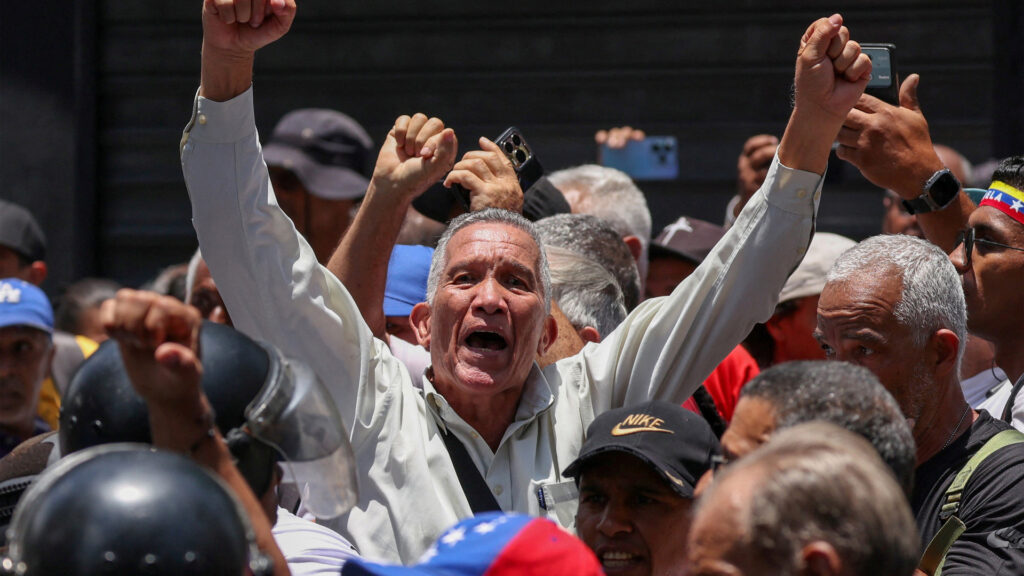
In Caracas, Venezuela, tensions escalated as riot police moved in to disperse crowds of protesters rallying for an increase in the minimum wage. The demonstrations, sparked by growing concerns over the cost of living and stagnant salaries, drew hundreds of citizens to the streets demanding urgent government action.
The protesters gathered at key public areas in the capital, holding signs and chanting slogans that called for fair wages to match the escalating inflation rates. Many cited their struggles to afford basic necessities such as food, medicine, and utilities.
Authorities responded by deploying riot police officers equipped with shields and helmets who used force to push back the crowds and clear the streets. Eyewitnesses reported the use of tear gas and physical barriers to prevent the protesters from advancing further.
This incident marks the latest episode in a series of labor demonstrations seeking better compensation amidst Venezuela’s ongoing economic challenges. For years, the minimum wage in Venezuela has failed to keep pace with hyperinflation, eroding purchasing power for many workers and contributing to widespread hardship.
Labor unions and worker advocacy groups have criticized the government for its inadequate wage policies and called for immediate revisions that reflect the cost of living inflation. “Our people are suffering, and it is unacceptable that those who work the hardest are paid the least,” said a representative of one union.
The Venezuelan government has maintained a firm stance, citing budgetary constraints and economic instability as obstacles to raising wages substantially at this time. Nonetheless, the protests highlight the growing frustration among the working class and the need for dialogue between officials and citizens.
Local economists warn that without substantial changes to wage policy and economic reforms, social unrest may intensify further. The demonstrations underscore the volatile situation facing the country as it struggles to stabilize its economy and improve living conditions for its population.
International observers and human rights organizations have urged Venezuelan authorities to respect the rights of protesters to peaceful assembly and avoid unnecessary use of force. Transparency and open communication are seen as essential steps towards addressing the demands of the workforce.
In summary, the recent clashes between riot police and wage protestors reflect deep-seated economic pain that continues to drive public dissent in Venezuela. The outcome of these tensions will likely influence the nation’s social and political landscape in the coming months.