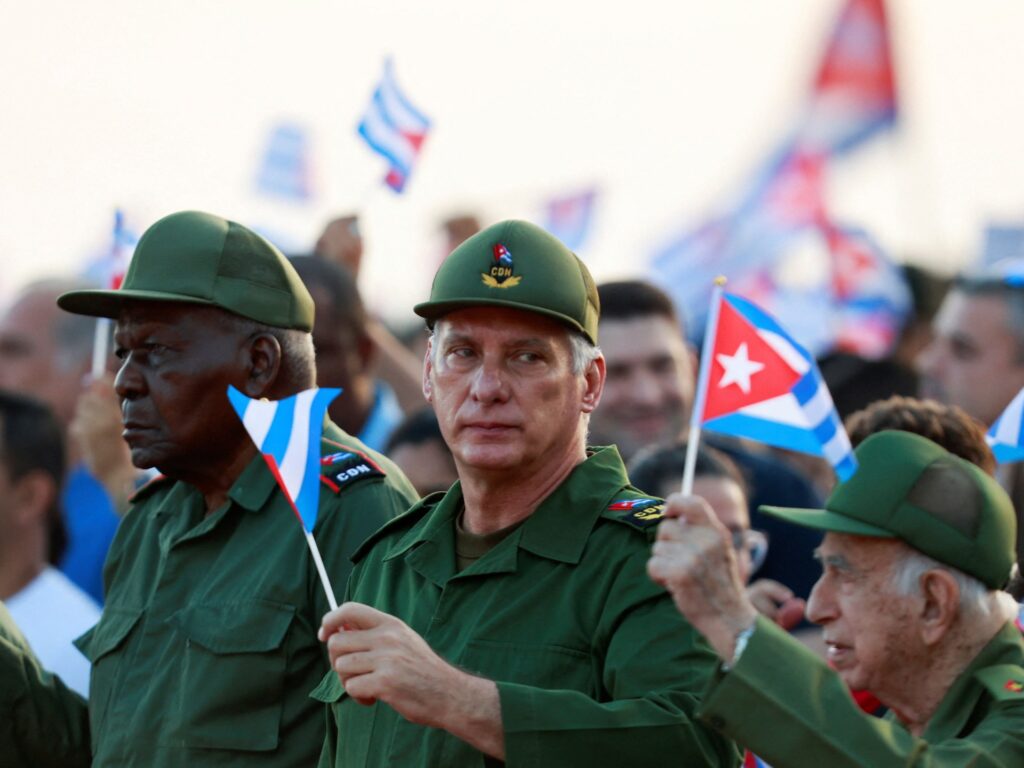
The United States government has escalated its pressure on Cuba by imposing sanctions on Cuban President Miguel Diaz-Canel. This move comes in the context of Cuba facing severe and ongoing challenges, including acute food shortages and widespread blackouts that have heavily impacted the daily lives of its citizens.
The sanctions represent a significant step in the US administration’s efforts to hold the Cuban leadership accountable for its handling of the country’s economic and humanitarian crises. The Cuban economy has been under strain for several years, exacerbated by long-standing embargoes, the COVID-19 pandemic, and recent disruptions in aid and trade.
President Diaz-Canel, who assumed office in 2018, has been a central figure in Cuba’s political approach during these turbulent times. The sanctions indicate a targeted approach by the US, aiming to increase diplomatic and economic pressure directly on the Cuban leadership rather than the broader population.
Cuba has been grappling with food shortages that have intensified due to a combination of factors including reduced imports, inefficiencies in domestic production, and economic mismanagement. Supermarket shelves frequently remain bare, and many Cuban families struggle to access basic necessities.
Moreover, the country is suffering from frequent power outages and blackout periods that disrupt daily life, healthcare, education, and business operations. These energy shortages are partly due to limitations in fuel supply and aging infrastructure.
The sanctions on President Diaz-Canel are part of a broader set of measures by the United States aimed at pressuring the Cuban government to undertake democratic reforms and improve human rights conditions. US officials have emphasized that these actions are intended to support the Cuban people in their aspirations for greater freedom and economic opportunity.
International response has been mixed, with some countries criticizing the sanctions as counterproductive, potentially worsening the hardships faced by ordinary Cubans, while others support the US stance on promoting political change in Cuba.
The Cuban government has condemned the sanctions, labeling them as unjustified and an act of aggression that unfairly targets Cuban sovereignty. It has vowed to continue its path despite US pressure, asserting that external constraints will not derail its developmental plans.
As Cuba continues to experience food scarcity and power failures, the international community watches closely to see how these new sanctions and ongoing crises will affect the island’s political stability and the wellbeing of its people. The situation underscores the complex and tense relationship between the United States and Cuba, marked by decades of embargoes, diplomatic hostilities, and intermittent attempts at rapprochement.
In summary, the US sanctions on President Miguel Diaz-Canel signal an intensification of efforts to influence Cuban policy amidst worsening internal conditions characterized by food shortages and blackouts. The coming months will be critical in determining the trajectory of Cuba’s political and economic landscape and the impact of external pressures on its governance.