The residents of Gaza’s Al-Mawasi neighborhood are facing an escalating humanitarian crisis as they grapple with acute water shortages. For many families, the daily struggle to access clean drinking water has become a matter of survival, sparking widespread distress and desperation.
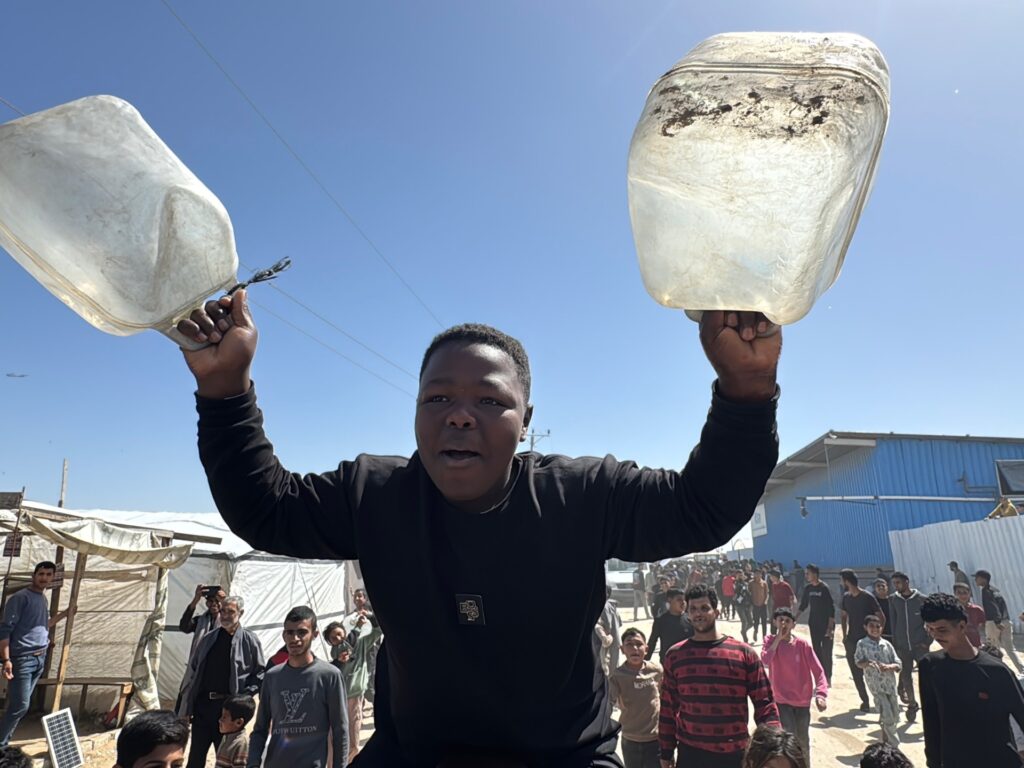
Al-Mawasi, a densely populated area within Gaza, has long faced infrastructural challenges, but the recent exacerbation of water scarcity has reached critical levels. Residents report enduring hours of waiting in lines to fill containers with water that is often unsafe for consumption. The scarcity is not merely inconvenient; it poses severe health risks, particularly for children and the elderly.
The water crisis in Gaza stems from multiple factors, including damage to the water supply networks, restrictions on maintenance and reconstruction efforts, and the ongoing blockade that limits the entry of essential materials. Environmental conditions compounded by the intense heat have further depleted the limited water resources available.
Families recount harrowing experiences of queuing at unreliable communal water points, only to receive contaminated water that threatens their safety. “We are dying of thirst,” one resident shared, capturing the depth of despair that pervades the community.
Efforts by humanitarian organizations to deliver potable water and repair infrastructure face logistical and political barriers. Meanwhile, local authorities struggle to manage the dwindling resources amid increasing demand.
The water crisis has also impacted sanitation systems, leading to further public health concerns. Overflowing sewage and stagnant water contribute to the spread of waterborne diseases, exacerbating the vulnerability of Gaza’s population.
Community leaders and activists have called for immediate international intervention to alleviate the crisis. They warn that without swift action, the situation will continue to deteriorate, jeopardizing the well-being of tens of thousands of residents.
In this environment of scarcity and uncertainty, the people of Al-Mawasi remain resilient, relying on communal solidarity and resourcefulness. Nonetheless, the poignant reality is clear: access to clean, safe water is a fundamental human right that must be restored.
As the crisis unfolds, global attention is necessary to support sustainable solutions that address both the immediate humanitarian needs and the long-term infrastructural challenges in Gaza. Without comprehensive efforts, the inhabitants of Al-Mawasi will continue to endure the harrowing ordeal of “dying of thirst.”