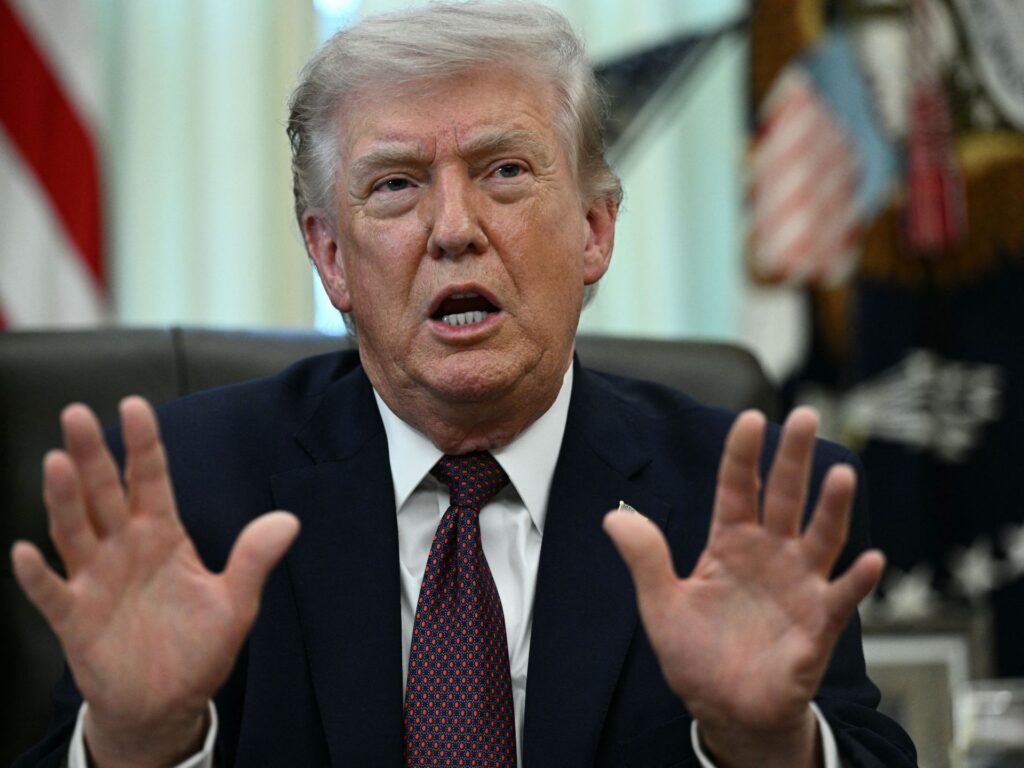
In the latest development amid escalating tensions in the Middle East, Iran has officially denied former U.S. President Donald Trump’s assertion that the Iranian President requested a ceasefire. This statement was made public following Trump’s controversial remarks in which he vowed that the United States would continue “blasting Iran into oblivion” until the Strait of Hormuz, a strategic and critical waterway, is reopened.
The Strait of Hormuz, through which a significant portion of the world’s oil supply is transported, has been a frequent flashpoint in U.S.-Iran relations. Recent events have heightened concerns about the security of this vital passage. Trump’s comments have come at a time when diplomatic efforts to ease tensions appear to be faltering.
According to official Iranian sources, the claim that the Iranian President sought a ceasefire is unfounded and misrepresents their position. Iran has reiterated its commitment to defending its sovereignty, emphasizing that it is responding to external provocations, particularly those it attributes to the United States and its allies.
The refusal to validate Trump’s claim about the ceasefire request signals Tehran’s intent to continue resisting what it describes as U.S. aggression. The Iranian government asserts that any disruption to the Strait of Hormuz stemmed from military pressure and economic sanctions imposed by the U.S., rather than from Iran itself.
Trump’s declaration that the U.S. will continue “blasting Iran into oblivion” has been met with international concern, with various countries urging restraint to prevent a possible military confrontation in the region. The global community recognizes the strategic importance of the Strait of Hormuz and is wary of any action that could destabilize global energy markets or provoke wider conflict.
Analysts note that the rhetoric from both sides reflects a deepening impasse, with little indication of imminent diplomatic resolution. The United States has maintained a firm stance on reopening the waterway to ensure the free flow of commerce, while Iran insists on lifting sanctions and discusses security guarantees before making concessions.
This clash of positions accompanies a broader geopolitical struggle in the Middle East, where alliances and rivalries complicate efforts toward peace. Iran’s denial of the ceasefire request and Trump’s aggressive statements underscore the fragility of the current situation.
Observers warn that continued hostility risks escalating into open conflict, which would have severe ramifications not only for regional stability but also for the global economy. Oil prices and international shipping routes are particularly vulnerable to disruption.
In summary, the latest developments reveal a significant divide in narratives between the U.S. and Iran. While Donald Trump asserts a ceasefire was sought by Tehran, Iranian officials vehemently reject this claim and signal readiness to continue contesting U.S. presence and policies in the region. The international community continues to monitor the situation closely, hoping for de-escalation and a return to dialogue to avoid further crisis at the Strait of Hormuz.