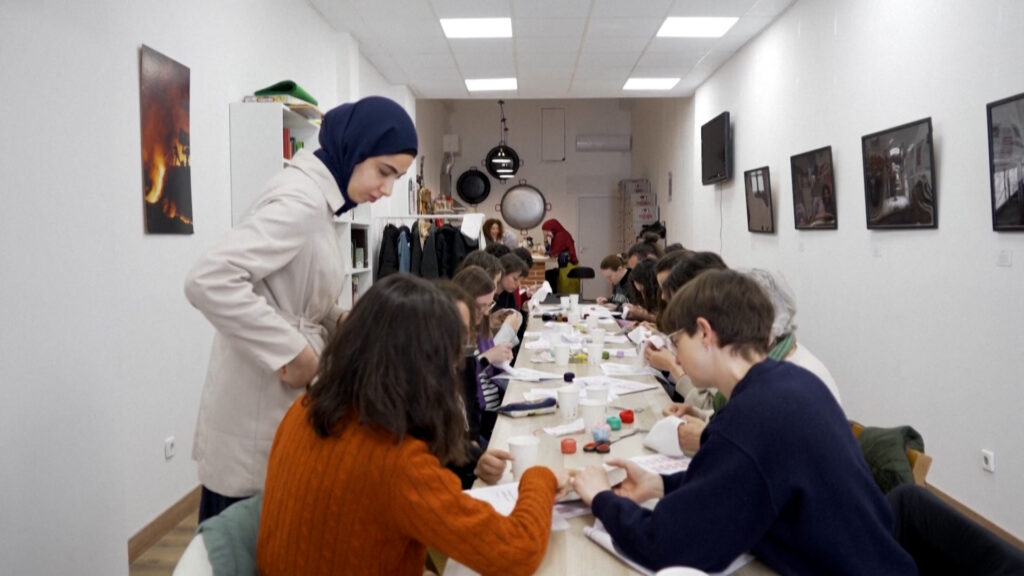
In the heart of Madrid, a unique cultural revival is taking place, led by a remarkable Palestinian refugee who is teaching the ancient art of ‘tatreez’ embroidery. Tatreez, a traditional Palestinian embroidery style characterized by its intricate geometric patterns and vibrant colors, holds deep cultural significance. It is not just an art form but a symbol of Palestinian identity, heritage, and resistance.
This initiative by the Palestinian refugee aims to preserve and promote tatreez in a foreign land, providing a vital link to Palestinian roots for those displaced and disconnected from their homeland. Through workshops and community classes, he teaches the techniques and history behind tatreez, emphasizing its role in the cultural narrative of Palestine.
Tatreez embroidery involves painstaking hand-stitching methods passed down through generations. Each pattern tells a story about Palestinian villages, personal experiences, and collective history. By continuing this tradition in Madrid, the instructor helps maintain a sense of identity and belonging among Palestinian diaspora communities and introduces wider audiences to authentic Palestinian culture.
The significance of tatreez extends beyond aesthetics; it is an act of cultural resistance. For Palestinians living abroad, engaging in tatreez represents resilience and a refusal to let their heritage fade despite the ongoing conflict and displacement.
Madrid, a bustling multicultural city, provides fertile ground for such cultural exchanges. The workshops attract not only Palestinians but also locals and immigrants of various backgrounds eager to learn and appreciate this unique craft. This fosters intercultural dialogue and mutual understanding, breaking down stereotypes and building solidarity.
The educator sees his work as a vital form of cultural preservation that empowers participants. Women, in particular, find tatreez classes to be spaces of empowerment and community bonding. They share stories and experiences over stitches, strengthening social ties and emotional support networks.
Furthermore, the rise in interest in traditional crafts worldwide means tatreez is gaining recognition as a valued art form. This attention helps to create economic opportunities for Palestinian artisans, who can market their handmade works to new audiences.
The teaching of tatreez in Madrid thus bridges past and present, tradition and innovation, and serves as a beacon of hope for cultural survival. It highlights the importance of art in maintaining cultural identity and amplifying voices that are often marginalized.
In summary, the Palestinian refugee’s initiative in Madrid is more than just a series of embroidery classes — it is a powerful act of cultural continuity, resistance, and community building. By stitching together intricate patterns on fabric, participants are also weaving stories of heritage, resilience and pride, ensuring tatreez remains a vibrant and living tradition far from its Palestinian origins.