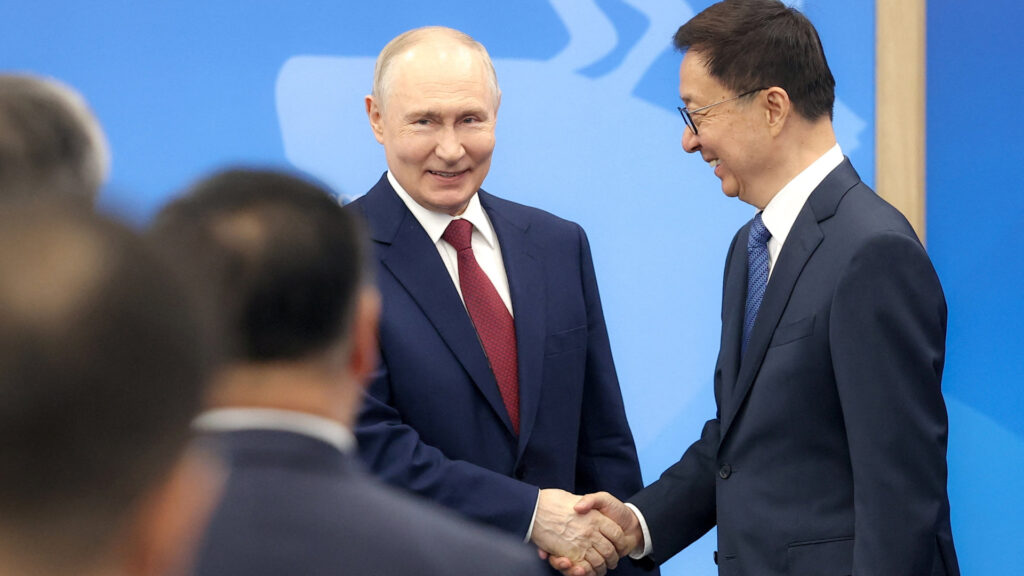
In a significant development amid escalating tensions, Ukrainian President Volodymyr Zelenskyy has revealed that Russian President Vladimir Putin has declined an offer for face-to-face discussions. This rejection is seen by Zelenskyy as a clear indication that Putin is opting for continued conflict rather than diplomatic resolution.
The offer for in-person talks came at a critical juncture, with both nations experiencing deep strain over ongoing disputes. Zelenskyy extended the invitation in hopes of opening a direct dialogue channel to potentially de-escalate the situation and explore peaceful solutions.
However, Putin’s refusal to engage directly has been interpreted by Ukraine’s leadership as a deliberate move to embrace war, sidelining prospects for negotiations. Zelenskyy stated that this choice could further destabilize the region and exacerbate the hardships faced by civilians caught in the conflict.
This move has drawn international attention, with global leaders watching closely to see whether diplomatic efforts can be revived or if hostilities will intensify.
The refusal underscores the current impasse in relations between Russia and Ukraine, highlighting the challenges in achieving a peaceful resolution. Zelenskyy urges the international community to intensify diplomatic pressure on Russia to reconsider its stance and return to the negotiation table.
As the situation develops, the focus remains on preventing further escalation and protecting the lives of those affected by the conflict. The rejection of in-person talks represents a setback, but Ukraine maintains its commitment to seeking peace through dialogue and international cooperation.
In summary, Putin’s decision to turn down Zelenskyy’s offer for direct talks signals a troubling turn towards war, compounded by the fragile geopolitical climate and ongoing disputes between the two nations. The international community continues to call for restraint and renewed diplomatic engagements to avoid a broader crisis.