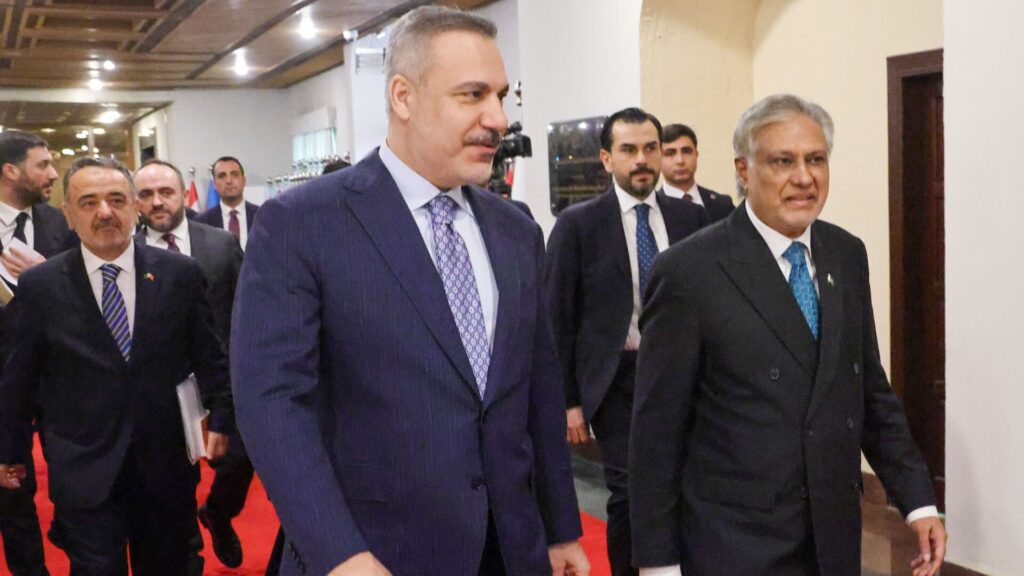
Pakistan has emerged as a significant diplomatic hub amid rising tensions surrounding the war in Iran, hosting top diplomats from Saudi Arabia, Turkey, and Egypt in Islamabad. These talks are part of Pakistan’s broader efforts to mediate between Iran and the United States, aiming to de-escalate the conflict that threatens regional stability and international peace.
The Pakistani government, leveraging its strategic position and historical diplomatic ties, has initiated a series of dialogues involving key stakeholders from the Middle East. The inclusion of Saudi, Turkish, and Egyptian representatives highlights the regional dimension of the conflict and the importance of a unified approach to address the crisis.
These diplomatic discussions come at a critical time when the war in Iran has intensified, raising concerns about humanitarian impacts and the potential for wider military engagement. Pakistan’s role as a mediator is seen as pivotal to bridging communication gaps between Iran and the US, both of whom have long-standing adversarial relations compounded by recent hostilities.
According to Pakistani officials, the talks in Islamabad focus on exploring avenues for ceasefire agreements, safe passage for humanitarian aid, and establishing a framework for future negotiations involving international actors. The Pakistani leadership underscores the need for peaceful resolution through dialogue rather than military confrontation.
Saudi Arabia’s involvement reflects its vested interests given its regional rivalry with Iran, while Turkey and Egypt, as influential Middle Eastern countries, offer perspectives that could help in balancing the negotiations and ensuring that any accord is inclusive and sustainable.
This diplomatic initiative follows several failed attempts at direct negotiations between the United States and Iran, which have struggled to progress amidst mutual distrust and ongoing sanctions. Pakistan’s mediation is therefore viewed as a fresh approach that could open new channels of communication and reduce tensions.
The international community, including the United Nations and key global powers, has welcomed Pakistan’s efforts, emphasizing that regional actors’ engagement is crucial for lasting peace. These talks also underline the importance of multilateral diplomacy in resolving modern conflicts which are often complex and involve multiple stakeholders.
The outcomes of the Islamabad talks remain to be seen, but the very fact that such high-level diplomacy is taking place signals hope for a de-escalation in the Iranian war. Pakistan’s role might not only bring immediate relief but could also pave the way for a more stable geopolitical landscape in the Middle East.
In conclusion, Pakistan’s recent hosting of Saudi, Turkish, and Egyptian diplomats underscores its growing diplomatic influence and commitment to peace in a region fraught with conflict. By acting as a mediator between the US and Iran, Pakistan is positioning itself as a crucial player in international diplomacy and conflict resolution.