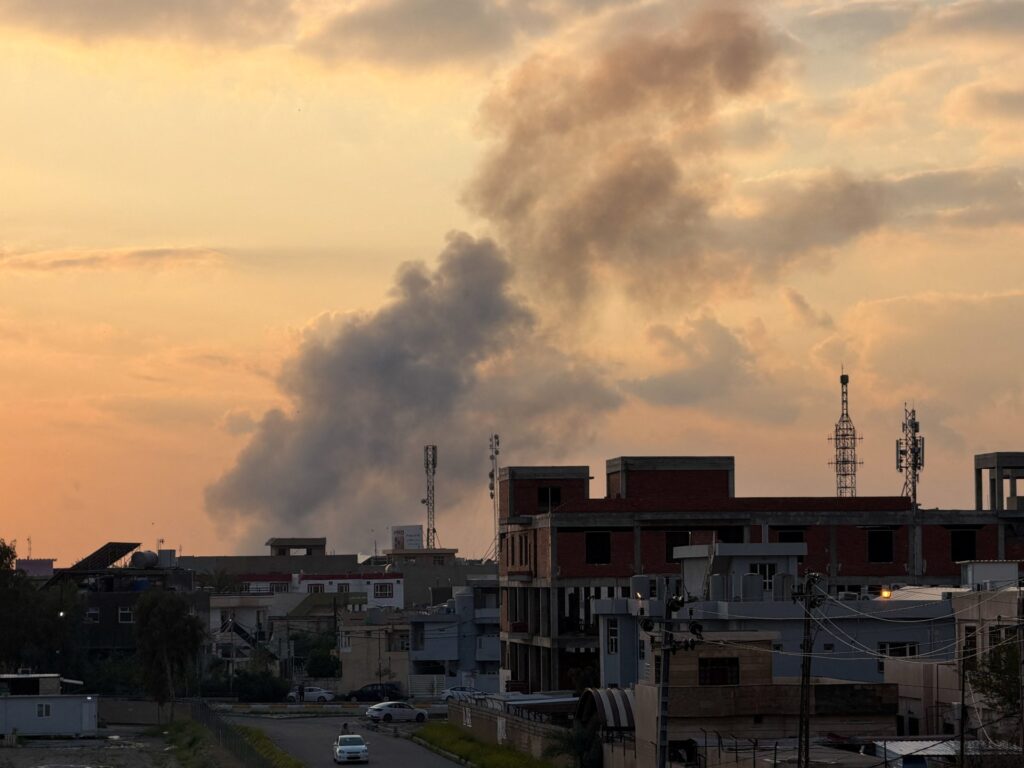
Recent air strikes in Iraq have resulted in the deaths of three Popular Mobilization Forces (PMF) fighters and two police officers, intensifying the already volatile security situation in the country. These attacks come in the context of a broader regional conflict that erupted on February 28, when a series of US-Israeli strikes targeted Iran, setting off a chain of violent escalations across the Middle East.
The Popular Mobilization Forces, a coalition of mainly Shia militias in Iraq, have played a significant role in the country’s security landscape, often working both with and independently from the Iraqi government. The loss of three PMF fighters highlights the challenges the group continues to face amidst rising tensions and increased foreign military involvements.
The two police officers killed in the same incident underscore the spillover effect the conflict has on Iraqi domestic security forces, who are frequently caught in the crossfire of external and internal hostilities. This tragic loss adds strain to an already stretched police force tasked with maintaining law and order in a country grappling with violence and instability.
Since the initial US-Israeli strikes on Iran at the end of February, Iraq has increasingly become a battleground for contesting regional powers. The strikes were aimed at Iranian interests and have triggered retaliatory attacks and military actions across neighboring countries, with Iraq often at the center due to its strategic location and the presence of Iranian-backed militias.
Experts warn that Iraq’s transformation into an ‘expanding battleground’ poses significant risks not only to the country’s sovereignty but also to regional security and stability. The continued military actions threaten to ignite further sectarian violence and undermine efforts to rebuild Iraq’s war-torn society.
Iraqi officials have called for restraint and urged foreign forces operating within their borders to abide by Iraqi sovereignty to prevent the situation from deteriorating further. Meanwhile, diplomatic efforts continue to seek a de-escalation of tensions, though with limited success so far.
Civilians and local communities remain caught in the midst of these conflicts, facing disruptions to daily life, threats to security, and humanitarian challenges. The international community remains concerned about the potential for broader conflict and calls for peaceful resolutions.
In summary, the recent air strikes that killed three PMF fighters and two police officers are a stark reminder of the ongoing volatility in Iraq. The country’s evolving role as a key battleground in the regional war initiated by US-Israeli actions against Iran represents a dangerous escalation with profound implications for Iraq and the wider Middle East.
Efforts to restore peace and stability in Iraq must address the underlying geopolitical tensions, respect national sovereignty, and prioritize dialogue to prevent further loss of life and destruction. As the situation develops, all eyes remain on Iraq’s ability to navigate this complex landscape and avoid being engulfed in an ever-widening conflict.