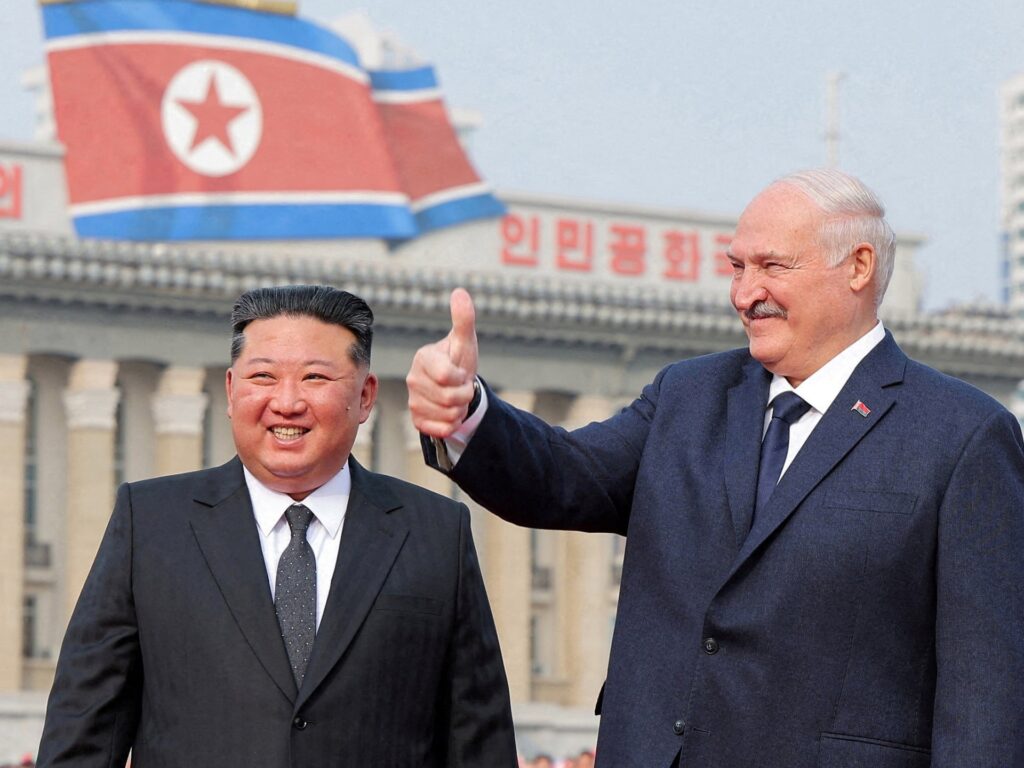
In a significant diplomatic engagement, North Korean leader Kim Jong-un met with Belarusian President Alexander Lukashenko in Pyongyang, marking a notable deepening of ties between the two nations. The meeting underscored their mutual support amidst growing international pressures, particularly from Western countries.
During the discussions, Kim expressed strong condemnation of Western pressure on Belarus, highlighting the challenges faced by the nation due to sanctions and geopolitical constraints. This criticism reflects the growing isolation both countries face from much of the Western bloc.
The meeting also celebrated the forging of a “friendship treaty,” symbolizing a ‘fundamentally new stage’ in bilateral relations as referred to by allies of Russian President Vladimir Putin. The treaty is expected to enhance cooperation across political, economic, and military spheres.
Pyongyang, North Korea’s capital, served as a fitting backdrop, showcasing the solidarity between Kim’s regime and Lukashenko’s government. This partnership aligns with broader geopolitical shifts as Russia’s key allies solidify ties in the face of Western opposition.
Analysts observe that this alliance could impact regional dynamics in Eastern Europe and Northeast Asia. The close cooperation might translate into coordinated responses to international sanctions and shared strategies to counter Western influence.
Kim and Lukashenko’s meeting also signals a united front supporting Russian interests, further complicating the geopolitical landscape. It projects a strategic axis between Moscow, Pyongyang, and Minsk deliberating on how to navigate ongoing sanctions and diplomatic isolation.
The freshly signed friendship treaty embodies more than symbolic unity; it pledges substantive engagement in areas including trade, technology exchange, and military collaboration. This is particularly significant as North Korea seeks allies amidst global scrutiny over its nuclear program policies.
Belarus benefits from this relationship by gaining a powerful supporter in Pyongyang amid its tensions with Western governments citing contested elections and human rights concerns. Both countries face international censure and economic difficulties largely spurred by these political stances.
The meeting and treaty also coincide with heightened global tensions stemming from conflicts involving Russia and its allies, underscoring an emerging bloc aimed at resisting Western-led initiatives. It highlights a challenges to Western dominance in international affairs.
Observers anticipate that this relationship could lead to more coordinated diplomatic efforts in international forums and possibly joint ventures in economic development projects designed to circumvent sanctions.
While the global community watches closely, the alliance of North Korea and Belarus represents a shift toward multipolarity, where emerging powers assert their sovereignty against traditional Western supremacy.
The coming months will reveal how this alliance influences broader geopolitical equations, possibly affecting security, economic, and diplomatic alignments worldwide.
This meeting marks a critical moment in both North Korean and Belarusian foreign policies, emphasizing their strategic autonomy and resistance to external pressures. It reflects a bold move to reshape their international relations landscape.