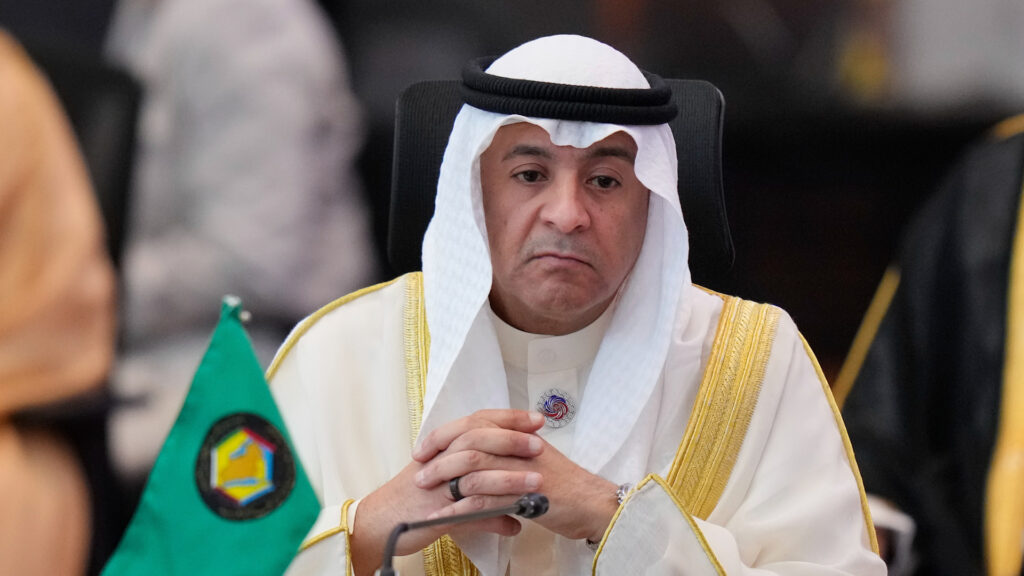
The Gulf Cooperation Council (GCC) Secretary-General Jasem al-Budaiwi has publicly accused Iran of imposing unauthorized charges on ships passing through the strategic Strait of Hormuz. This vital waterway, which connects the Persian Gulf with the Gulf of Oman and the Arabian Sea, is one of the world’s most crucial maritime chokepoints, facilitating a significant portion of global oil shipments.
Al-Budaiwi’s statement comes amid ongoing tensions in the Gulf region, where Iran’s activities have frequently drawn international scrutiny and concern. According to the GCC chief, Iran has started charging fees for vessels sailing through the Strait, a practice seen as provocative by regional Gulf countries.
The Strait of Hormuz is critical for the economies of Gulf nations, many of which rely heavily on oil exports. The imposition of fees by Iran could potentially increase shipping costs and disrupt the free flow of trade, raising alarm among Gulf states and global markets.
The GCC, an alliance of six Gulf states including Saudi Arabia, Kuwait, the United Arab Emirates, Qatar, Bahrain, and Oman, views Iran’s actions as a breach of international maritime law. Al-Budaiwi emphasized that no nation has the right to impose tolls on international waterways under lawful navigation.
Experts suggest that Iran’s move may be intended to assert greater control over the Strait and to leverage its geopolitical influence in the region. The country has previously threatened to close the waterway in response to sanctions and military pressures.
Shipping companies and international maritime organizations have yet to officially respond to these allegations, but the issue has raised concerns about the security and stability of one of the world’s busiest sea routes.
The Strait of Hormuz sees the passage of about 20% of the world’s petroleum, making its openness and security paramount to global energy supplies.
In response to the accusations, Iranian officials have not publicly acknowledged the imposition of fees. However, they have consistently maintained their right to secure and monitor the passage in their territorial waters.
The GCC Secretary-General called on the international community to condemn any attempts to disrupt maritime navigation in the Strait. He stressed the need for cooperative security arrangements to ensure that the flow of shipping remains uninterrupted.
This development adds to the ongoing geopolitical complexities in the Gulf region, where Iran’s relations with neighboring countries and the wider international community remain strained.
The future of maritime transit through the Strait of Hormuz remains uncertain as stakeholders seek diplomatic solutions to avoid escalation.
In summary, the GCC chief’s accusation against Iran highlights heightened tensions centered on control and security of one of the world’s most vital maritime corridors. The international community is urged to carefully monitor the situation and work towards maintaining peace and freedom of navigation in the Gulf.