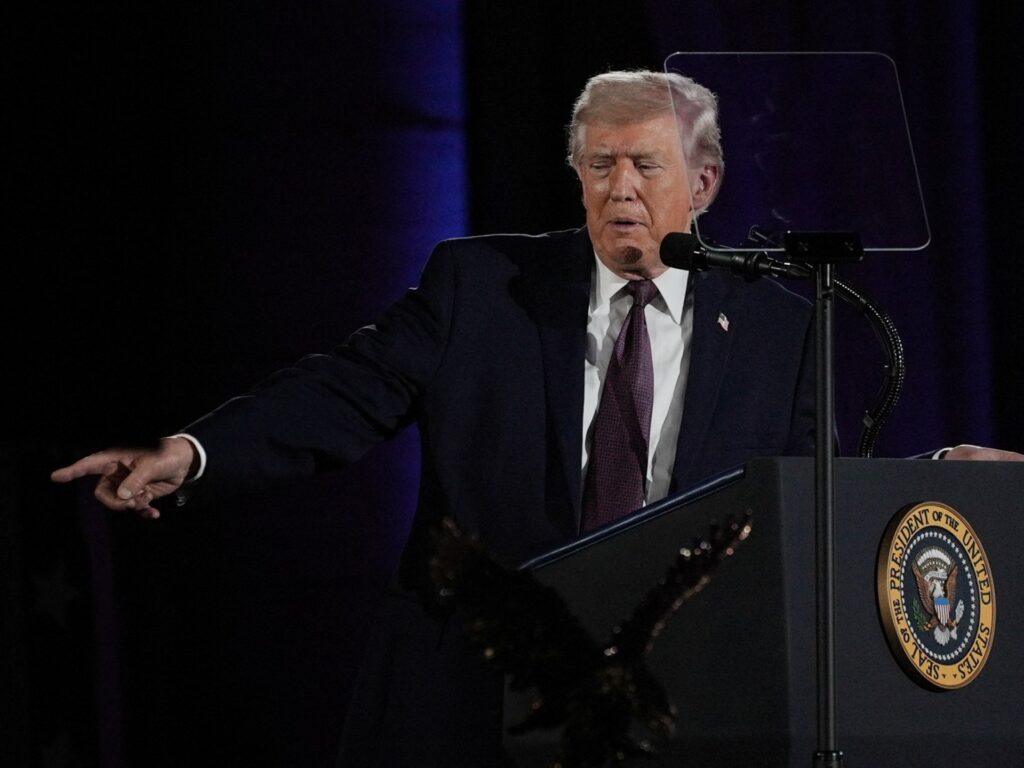
Former U.S. President Donald Trump recently stated that Iranian leaders are eager to strike a deal with the United States but are hesitant to publicly admit to negotiations due to fear of retaliation. In his remarks, Trump emphasized that Iran is actively engaging in talks with the U.S., signaling a strong desire for diplomatic resolution, yet the Iranian regime remains cautious about revealing this intent openly.
Trump’s comments suggest a complex dynamic where Iran’s leadership seeks to avoid external pressures and potential backlash from within their ranks or from hardline factions opposed to negotiation with the U.S. This tension reflects the broader geopolitical challenges in U.S.-Iran relations, particularly concerning negotiations around issues like nuclear development and economic sanctions.
While the details of the ongoing talks remain confidential, Trump’s assertion points to a window for potential diplomatic breakthroughs. He implied that Iran’s reticence is rooted in a fear that acknowledging dialogue could provoke retaliation either from the U.S. or from rival groups inside Iran.
The former president’s insights arrive amid fluctuating U.S. foreign policy stances on Iran, where engagement alternates with sanctions and military posturing. Trump’s perspective underscores the delicate balance Iran tries to maintain between pursuing diplomatic solutions and managing internal political risk.
Experts note that such statements, while reflective of some realities, also serve political narratives that influence public perception and diplomatic maneuvering. The claim that Iran wants a deal ‘so badly’ but fears retaliation highlights the psychological and strategic barriers in achieving lasting peace and stability in the Middle East.
This evolving situation calls for careful attention as any progress on negotiations could significantly impact regional security, global energy markets, and international diplomatic alignments. The international community watches closely to see if diplomatic efforts can overcome decades of mistrust and conflict.
In summary, Trump’s remarks reveal an important but complicated aspect of U.S.-Iran relations: a mutual interest in negotiation shadowed by fear of consequences, which continues to shape the trajectory of their interactions.