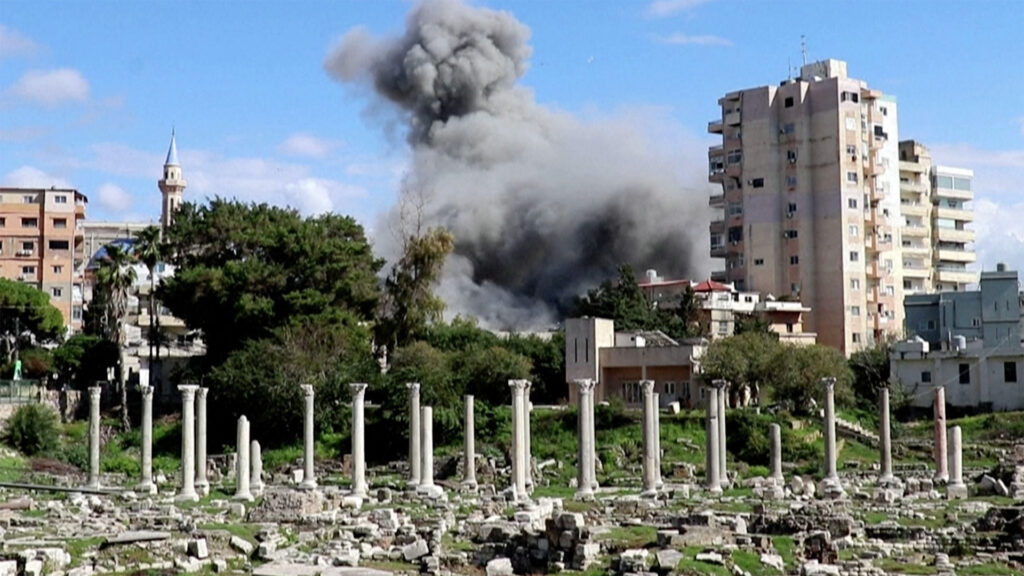
An Israeli airstrike recently hit a building near the ancient Roman ruins in the Lebanese city of Tyre, raising alarm about the safety of the historic site and the surrounding civilian areas. Smoke was seen rising above the site, prompting fears over potential damage to the centuries-old archaeological landmarks which hold significant cultural and historical value.
The city of Tyre, located in southern Lebanon along the Mediterranean coast, is renowned for its well-preserved Roman ruins, which are a UNESCO World Heritage Site. These ruins attract historians, archaeologists, and tourists alike, showcasing the rich historical tapestry of the region.
The strike was part of ongoing military tensions between Israel and various groups in Lebanon, a situation that continues to affect the stability of the region. While the specific target of the strike was a building adjacent to the ruins, the proximity to such a valuable cultural site has sparked international concern.
Local authorities and preservationists have condemned the strike, highlighting the risk posed to Lebanon’s heritage. Initial reports indicate that there were no immediate casualties, but the potential destruction of the nearby ancient structures could have long-lasting consequences.
This incident underscores the dangers faced by cultural heritage sites caught in conflict zones. In recent years, armed conflicts have increasingly endangered historical sites across the Middle East, leading to calls for stronger international protections.
Lebanese officials have called for an investigation into the strike and urged all parties involved in the conflict to take measures to protect the city’s historical landmarks. Diplomatic efforts are being emphasized to deescalate tensions and prevent further incidents that could damage not only human life but also the cultural heritage of the region.
The global community, including UNESCO, is closely monitoring the situation in Tyre and other heritage sites impacted by conflict. Preservationists stress that safeguarding cultural assets during times of warfare is essential to maintain the historical identity and legacy of affected regions.
As reconstruction and peace-building efforts continue in Lebanon, the protection of key archaeological sites like those in Tyre remains a priority for both local authorities and international heritage organizations. The recent strike serves as a stark reminder of the vulnerabilities faced by cultural treasures in areas of geopolitical strife.
In conclusion, the Israeli strike near the Roman ruins in Tyre has brought attention to the critical need for balancing military objectives with the preservation of invaluable cultural heritage. It calls for increased vigilance and cooperation to ensure that history is not lost amid the ongoing conflict.