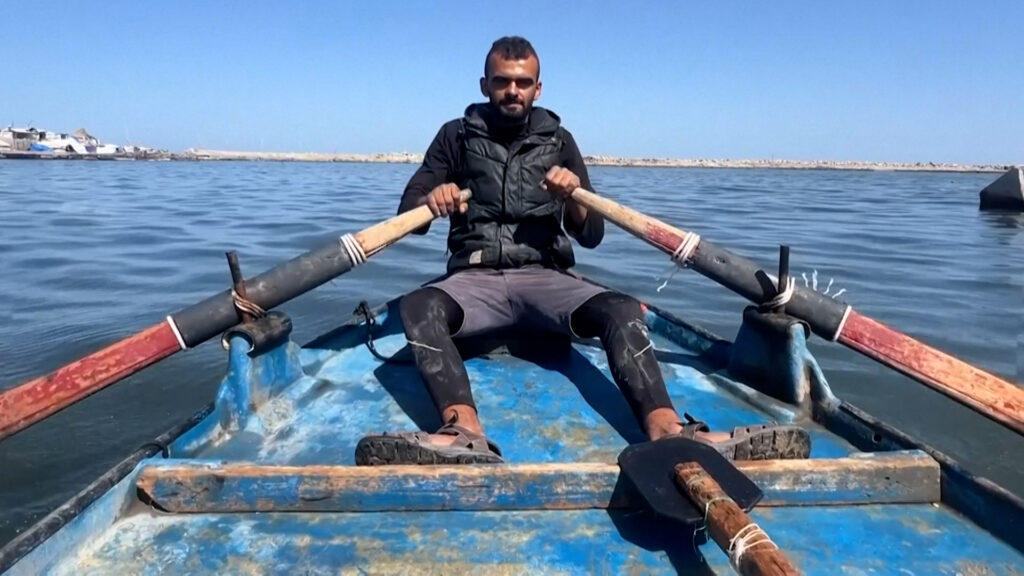
In the challenging coastal waters of Gaza, local fishermen have displayed remarkable ingenuity and resilience amid ongoing hardship. Due to restricted access to new materials and severe economic constraints, Gaza’s fishermen have turned to an unconventional and resourceful solution: constructing dinghies from reclaimed materials, including fiberglass, wood, and doorframes salvaged from rubble.
The Gaza Strip, a densely populated area along the Mediterranean Sea, has long faced political instability and economic blockade, making everyday materials scarce and costly. For fishermen, whose livelihood depends entirely on access to the sea, this scarcity presents a significant challenge. Traditional boats and fishing equipment are hard to come by.
In response, these fishermen collect discarded doorframes and other salvaged wood from rubble—left behind by past conflicts and demolished buildings. They skillfully craft these into the framework of small dinghies that serve as their vessels for fishing trips. Fiberglass from various sources is repurposed to reinforce the boats, providing them with the necessary durability to navigate the waters safely.
These improvised dinghies may lack the sophistication or durability of commercial boats, but they represent crucial tools that allow fishermen to continue their trade. This DIY approach highlights the resilient spirit of the fishing community, who adapt to harsh conditions to support their families.
Fishing remains one of Gaza’s primary sources of food and income, and these handcrafted boats play a vital role in sustaining the fragile economy. The fishermen’s creativity not only demonstrates resourcefulness but also reflects broader themes of survival and innovation amid adversity.
The process of assembling a single dinghy involves considerable skill and effort. Reclaimed doorframes are stripped of metal fittings, shaped, and aligned to create the hull, while fiberglass sheets are layered for waterproofing and strength. This labor-intensive work often occurs in modest workshops or open-air environments near the coastline.
Environmental challenges also persist. The limited size and condition of these boats restrict how far fishermen can venture into the sea, often limiting them to nearshore zones that are sometimes overfished and polluted. Despite this, the use of recycled materials minimizes waste and illustrates a sustainable approach forced by necessity.
Local communities and aid organizations have taken note of this initiative, occasionally providing supportive tools and training to improve the safety and efficiency of these makeshift boats. However, without broader political and economic solutions, the challenges facing Gaza’s fishermen continue.
In conclusion, the story of Gaza’s fishermen and their dinghies made from reclaimed doorframes is more than a tale of maritime survival; it is a poignant example of human resilience, ingenuity, and the unyielding determination to sustain livelihoods against the odds. Their efforts shed light on the broader hardships in Gaza while inspiring hope through innovation and community spirit.