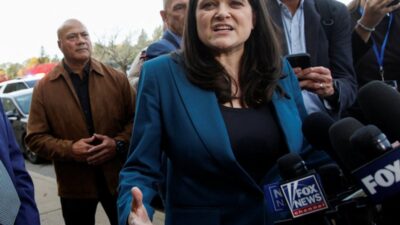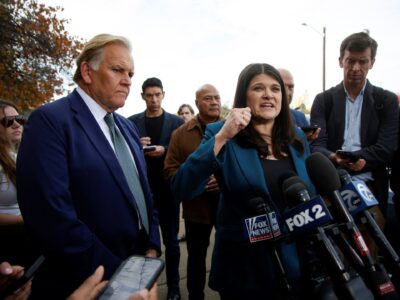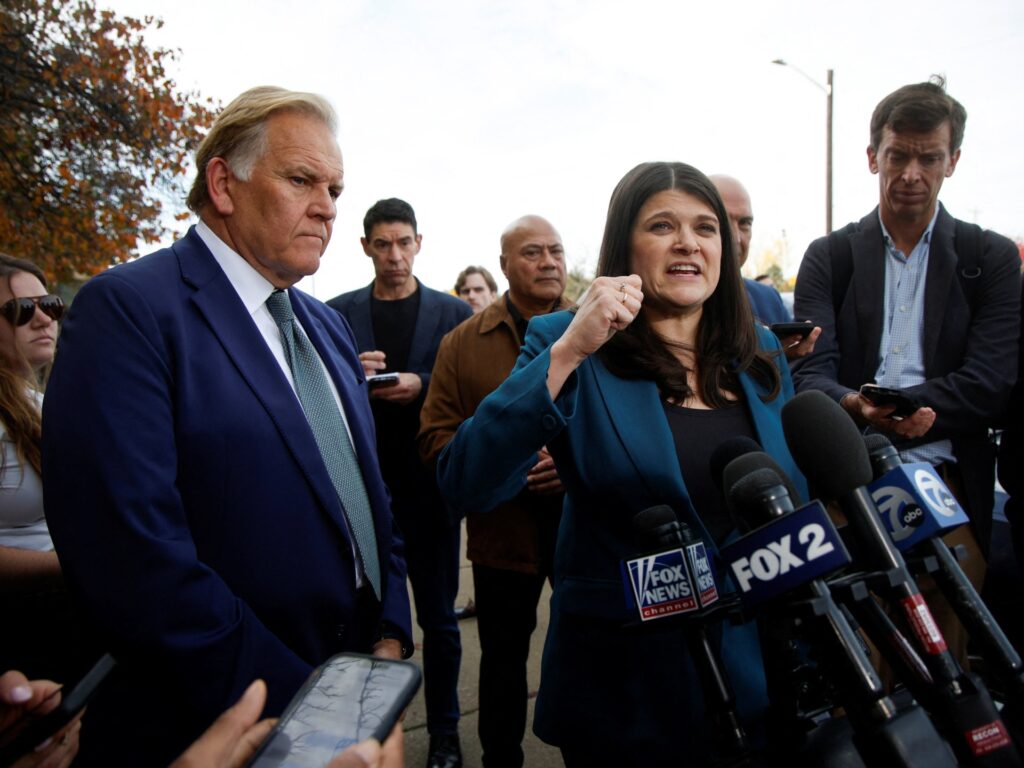
In a surprising political move, Democrat Haley Stevens has endorsed Republican Mike Rogers for the US Senate, breaking party lines in a decision that has stirred considerable attention and debate. This endorsement comes on the heels of a bitter dispute with the Democratic nominee Abdul El-Sayed, marking a significant and public rift within the Democratic Party.
Haley Stevens, a respected Democratic congresswoman, has been vocal about her concerns regarding El-Sayed’s candidacy. The dispute reportedly centers on ideological differences and campaign strategies, with Stevens expressing dissatisfaction with El-Sayed’s approach and policies. This discord has prompted Stevens to take the unusual step of supporting a Republican candidate whom she believes better represents her views on certain key issues.
Mike Rogers, the Republican candidate, has welcomed the endorsement, viewing it as a testament to his bipartisan appeal and a validation of his campaign’s message. Rogers, a former congressman with a strong reputation in national security and defense, portrays himself as a centrist who can work across the aisle to address pressing state and national concerns.
The endorsement has sparked varied reactions within political circles and among voters. Democrats loyal to El-Sayed see Stevens’ endorsement as a betrayal and a sign of internal party divisions that could weaken their chances in the upcoming election. Conversely, some moderate voters and independents may interpret the endorsement as a call for pragmatic governance over partisan politics.
Political analysts suggest that such endorsements can play a crucial role in tightly contested races, potentially swaying undecided voters by demonstrating cross-party support. However, this move also highlights the complexity and factionalism within political parties, especially in an era marked by polarization.
Stevens’ decision underscores the challenges faced by party members in balancing personal convictions with party loyalty. It reflects broader tensions within the Democratic Party, where differing visions for the future and strategy debates are increasingly coming to the forefront.
As the Senate race intensifies, the impact of Stevens’ endorsement on voter behavior and the overall election outcome remains to be seen. What is clear is that this development adds a dramatic twist to the political landscape, illustrating how individual choices by influential politicians can reshape campaign dynamics and voter perceptions.