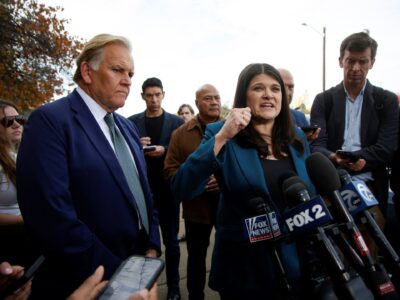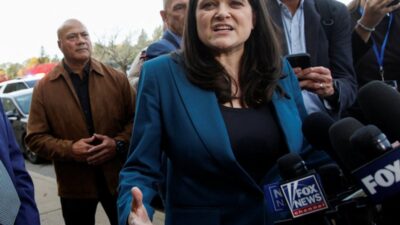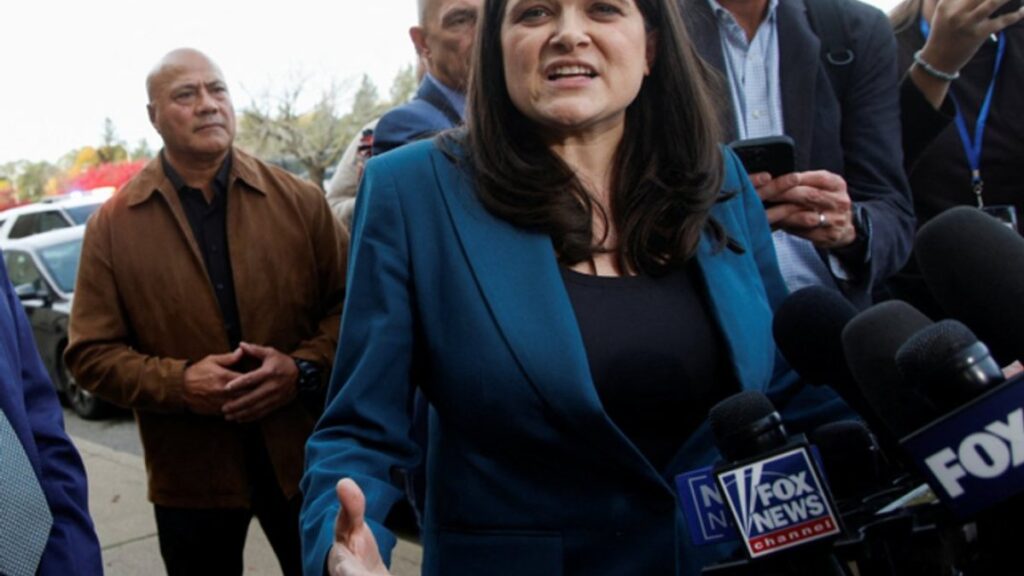
In a surprising political development, US Democrat Haley Stevens from Michigan was publicly heckled and labeled a ‘traitor’ after endorsing Republican Mike Rogers. Stevens, known for her Democratic affiliation, decided to back Rogers, who is running against candidate El-Sayed in an upcoming election.
The endorsement stirred significant controversy among Democratic supporters and highlighted the complex dynamics within party lines. Stevens’ decision to support a Republican candidate over a rival aligned more closely with her party caused outrage and accusations of betrayal.
During a public event, Stevens faced vocal opposition from attendees who shouted remarks branding her a traitor, reflecting deep dissatisfaction with her choice. This incident brought to light the tensions that can arise when political figures cross party lines in high-stakes elections.
Haley Stevens’ endorsement of Mike Rogers seems to be driven by specific policy agreements or strategic considerations rather than party loyalty. However, this move raises questions about the implications for her political future within the Democratic Party.
Mike Rogers, the Republican candidate, has positioned himself as a strong contender against El-Sayed, leveraging support from figures like Stevens to broaden his appeal. The endorsement could be a calculated effort to sway moderate voters and undermine El-Sayed’s campaign.
El-Sayed and his supporters have condemned Stevens’ endorsement, emphasizing party unity and loyalty. They view Stevens’ actions as undermining democratic values and weakening the candidate’s chances.
The event where Stevens was heckled attracted media attention, sparking debates on political allegiance and the consequences of crossing party lines in contemporary American politics. Analysts suggest this incident reflects broader shifts and fractures within both major political parties.
The backlash against Stevens underscores the volatility and unpredictability of local election campaigns, especially when candidates and endorsers defy conventional party expectations.
As this political drama unfolds, it remains to be seen how Stevens’ endorsement will impact the election outcome and her standing within the Democratic Party. The confrontation reveals the high stakes and passionate sentiments involved in electoral contests.
In summary, Haley Stevens’ decision to endorse Republican Mike Rogers has ignited controversy and public backlash, illustrating the complex interplay of loyalty, strategy, and identity in US politics.