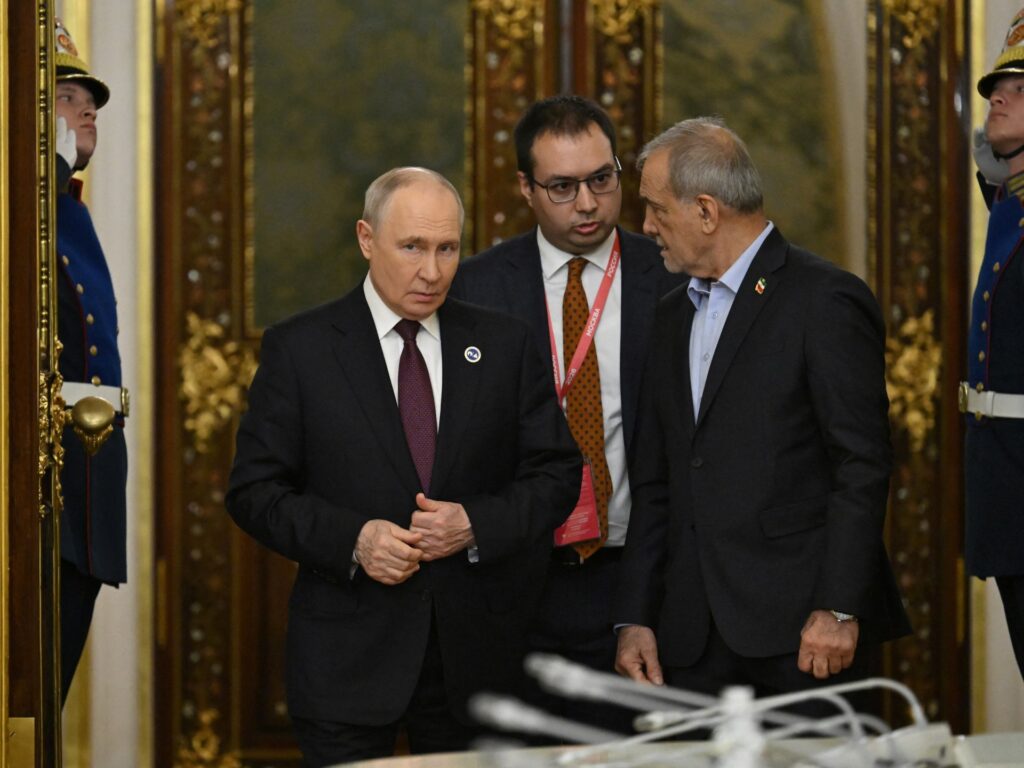
In a significant statement made during a summit for gas-exporting countries held in Russia, Iranian official Pezeshkian emphasized that the Middle East has the capacity to solve its own problems without external interference, specifically pointing to the United States. This declaration highlights a continuing narrative from Iran advocating for regional autonomy in addressing conflicts and challenges.
The summit brought together key players in the global energy sector, especially nations that are major exporters of natural gas. Discussions often centered on energy markets, cooperation, and geopolitical dynamics affecting supply and demand. Amid these talks, Pezeshkian’s comments underscored political issues intertwined with energy economics, focusing on sovereignty and self-reliance in regional conflict resolution.
Iran’s stance on the Middle East’s ability to manage its challenges independently aligns with its broader foreign policy perspectives, which rebuff Western, particularly American, involvement in regional affairs. The official’s remarks may be interpreted as a critique of ongoing US influence and actions in the Middle East, which Tehran often views as destabilizing.
Considering the complex backdrop of tensions, including ongoing wars and political crises in parts of the Middle East, such statements contribute to a discourse advocating for regional solutions led by local actors. The spotlight on the gas summit emphasizes the strategic importance of the region’s energy resources and its role in international geopolitics.
The Iranian president’s remarks underscore the desire among some Middle Eastern leaders to assert more control over their political and economic destinies. By suggesting that the Middle East can solve its issues without the US, Pezeshkian reflects a call for a shift in how international engagement with the region is conducted, potentially influencing future diplomatic approaches and alliances.