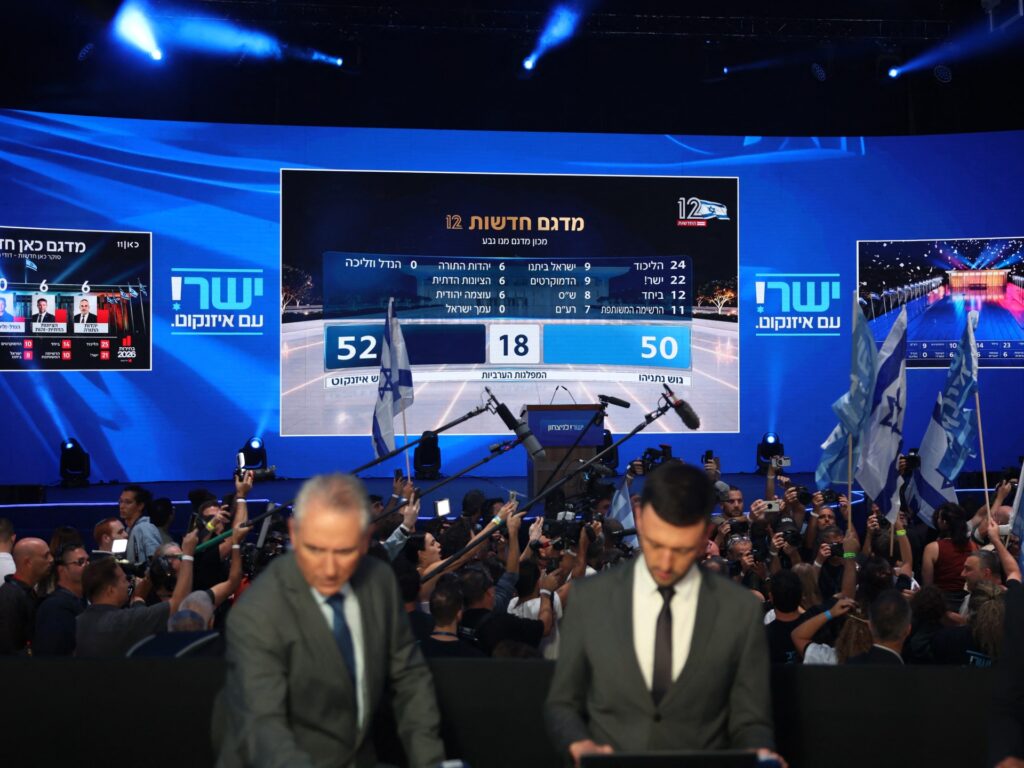
Israel’s recent general election, the country’s first since the October 7 events, has resulted in a highly uncertain outcome according to exit polls. The polls signal significant challenges for incumbent Prime Minister Benjamin Netanyahu, but they also indicate that no clear winner has emerged from the vote.
Preliminary results show a deadlock between Netanyahu’s Likud party and the opposition, including former military chief Benny Gantz’s Blue and White alliance. Neither side appears poised to secure a decisive majority in the Knesset, Israel’s parliament.
This uncertain electoral outcome reflects a deeply divided Israeli electorate, with the political landscape fragmented into several competing factions. Netanyahu, who has served multiple terms as prime minister, faces strong opposition due to various political and legal controversies, yet still commands a loyal voter base.
On the other side, Benny Gantz and his allies have gained significant support riding a platform centered around security and governance reforms. However, the divided nature of the vote means they are far from an outright victory.
The election was conducted amid heightened national tensions and ongoing concerns about security, impacting voter sentiment and turnout. The results suggest that coalition building will be critical in the coming weeks, as no single party or bloc has obtained enough seats to govern unilaterally.
This deadlock could lead to protracted negotiations among parties, with potential for new alliances or unexpected compromises. The political uncertainty adds complexity to Israel’s already challenging domestic and international environment.
Observers note that the fragmented vote underscores a shift in Israeli politics, where traditional party loyalties are evolving and new political narratives are emerging. The inability to secure a clear majority after a high-stakes election might reflect broader public ambivalence toward longstanding political figures.
As the situation develops, all eyes will be on the coalition talks and whether an effective government can be formed. The outcome will have significant implications not only for Israel’s internal policy direction but also for its regional and international relations.
In summary, Israel’s first election since October 7 has resulted in a deadlocked parliament with no obvious winner. Challenges lie ahead for Netanyahu and his rivals alike as they navigate a complex political landscape marked by division and uncertainty.