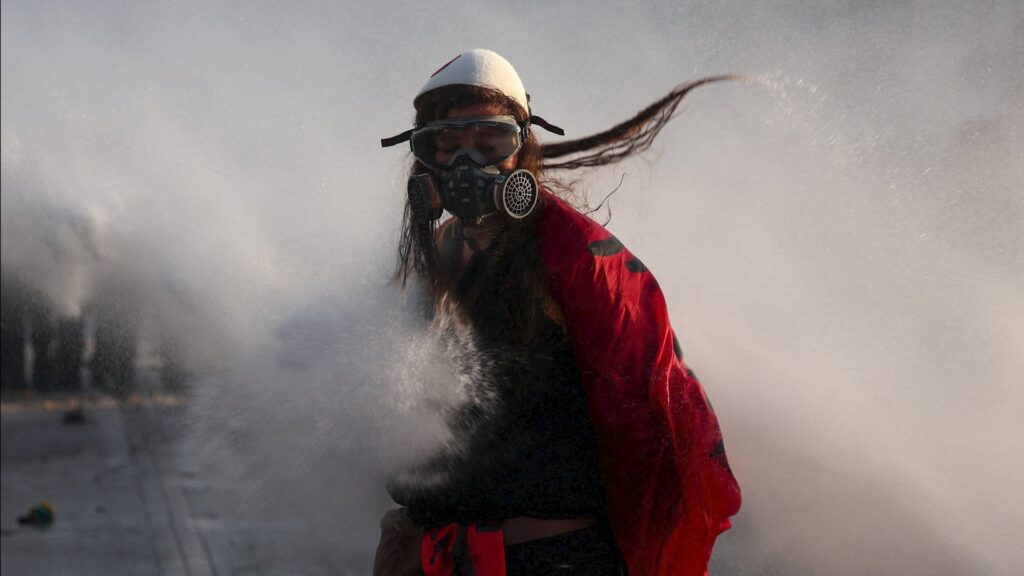
Albania has been engulfed in violent clashes as anti-government protests enter their twelfth consecutive day. Demonstrators, expressing deep dissatisfaction with the current administration, have engaged in running battles with police forces across multiple cities. The government’s intensified crackdown aims to restore order but has simultaneously inflamed tensions, leading to chaotic scenes on the streets.
The protests initially began as peaceful demonstrations but soon escalated due to mounting frustrations over political issues, economic concerns, and allegations of corruption within the government. Night after night, thousands of citizens have taken to the streets, determined to voice their grievances and demand change.
Police, equipped with riot gear, have responded with measures including tear gas, water cannons, and mass arrests to quell the unrest. The confrontations have resulted in numerous injuries on both sides, with hospitals reporting a surge in emergency admissions linked to the protests.
International observers and human rights organizations have expressed alarm at the escalating violence, urging restraint and calling for dialogue between the government and opposition groups. Despite these calls, both sides remain entrenched, with no immediate resolution in sight.
The Albanian government defends its actions as necessary to maintain public order and security. Officials have condemned the violence, accusing opposition leaders of inciting unrest for political gain. Meanwhile, protest organizers insist their movement is peaceful and demand transparent investigations into graft and abuse of power.
Economic repercussions are beginning to surface as ongoing disturbances disrupt daily business operations and deter foreign investment. The tourism sector, vital to Albania’s economy, has reported cancellations and a decline in visitor numbers amid the instability.
Local communities are caught in the crossfire, with residents expressing concern over safety and uncertainty about the future. Schools and public services have experienced intermittent closures due to security concerns, further impacting daily life.
The crisis highlights deep divisions within Albanian society, reflecting broader regional challenges related to governance, democracy, and social justice. The coming days are critical as the government and opposition face mounting pressure to negotiate a peaceful path forward.
Observers continue to monitor developments closely, hopeful for a de-escalation of tensions and the emergence of constructive political dialogue. Meanwhile, the Albanian populace remains resolute, determined to see their voices heard in the quest for a more just and accountable government.