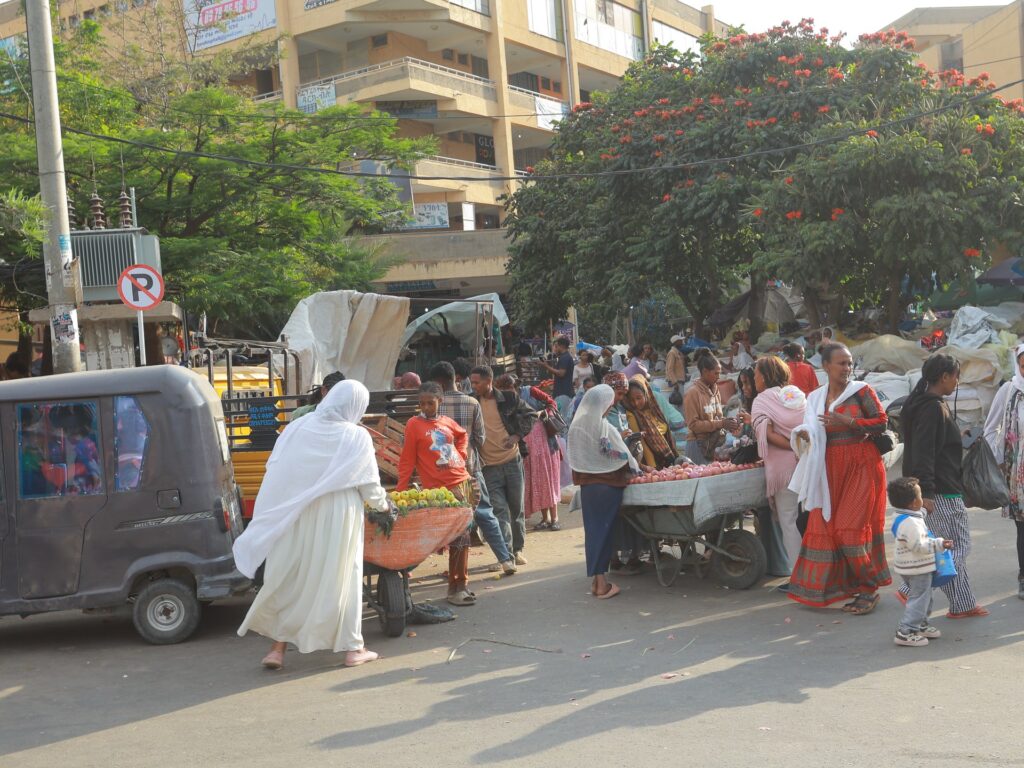
In the northern Ethiopian region of Tigray, residents are cautiously returning to daily routines as the city of Mekelle reopens after a period of conflict and disruption. Despite this resumption of everyday activities, significant fears persist among the population about the possibility of the conflict spreading further, potentially igniting a wider war that could affect neighboring regions and countries.
Mekelle’s reopening symbolizes a tentative step toward normalcy after months of instability that have severely impacted the region’s social and economic fabric. Markets are slowly filling, schools are attempting to restart classes, and public services aim to operate despite ongoing challenges. However, the situation remains fragile and uncertain.
The economic hardships faced by Tigray’s residents continue to weigh heavily on the population. The prolonged conflict has disrupted trade routes, agricultural activities, and access to essential goods, resulting in food insecurity and a strained economy. Humanitarian aid has had limited access, complicating efforts to relieve suffering and rebuild livelihoods.
Many inhabitants express a mixture of hope and apprehension; while they welcome the chance to resume work and education, the memories of violence and displacement linger. Communities are eager to rebuild but remain wary of how the evolving political and military dynamics might impact their future.
International observers have raised alarms about the risk of the conflict escalating beyond Tigray, potentially drawing in neighboring regions and exacerbating an already volatile situation in the Horn of Africa. Diplomatic efforts are underway to encourage dialogue and prevent further escalation, but progress has been slow.
The reopening of Mekelle represents a critical milestone, yet it offers only limited relief given the broader context of instability and economic hardship. The resilience of Tigray’s people is evident as they navigate these complex challenges, but the path toward lasting peace and recovery remains uncertain and fraught with risks.
In summary, while Mekelle’s return to a semblance of daily life marks a hopeful development, the shadow of potential wider conflict and continued economic difficulties looms large over Tigray. The coming months will be decisive in shaping the region’s trajectory and the prospects for peace and stability in northern Ethiopia and beyond.