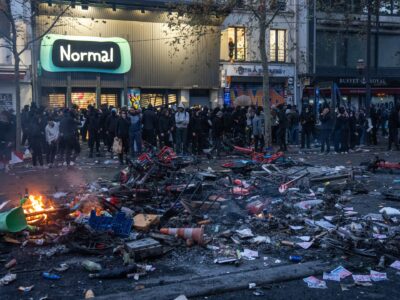
Recent protests across France have been characterized as an outburst of public resentment against President Emmanuel Macron’s policies, according to French student union spokesperson Alice Cohen-Morzadec. These demonstrations, which have seen a significant turnout of students and workers alike, underscore a widening dissatisfaction among various social groups with the government’s stance on economic and social reforms.
Alice Cohen-Morzadec highlighted that the protests are not merely isolated incidents but rather a manifestation of deeper frustrations. Many citizens feel that Macron’s policies favor the elite while neglecting the welfare and rights of ordinary people. This sentiment has been fueled by recent reforms in labor laws, pension systems, and educational institutions that many perceive as detrimental to social equity.
The student communities, in particular, have been vocal about their concerns. The union spokesperson pointed out that students are worried about the increasing cost of education, reduced public funding for universities, and uncertain job prospects post-graduation. These challenges have galvanized the youth to participate actively in the protests.
Moreover, the protests have drawn support from various labor unions and social activists who argue that the government’s approach exacerbates social inequality and undermines workers’ rights. The collaboration between students and labor groups has intensified the scale and impact of the demonstrations, signaling a broader coalition of opposition.
Government officials have responded with calls for dialogue and assurances that reforms are aimed at ensuring long-term economic stability and growth. However, many protesters remain skeptical, demanding the reversal of certain policies and a more inclusive approach to governance.
The situation remains fluid, with planned marches, strikes, and sit-ins expected to continue in the coming weeks. Observers note that the ongoing unrest highlights significant challenges for Macron’s administration as it seeks to balance reform initiatives with the demands of a diverse and often restless populace.
In summary, the protests in France represent a significant expression of public dissatisfaction with President Macron’s policies. The involvement of students, workers, and various social groups underscores a broad coalition united by their call for change. As the government navigates this turbulent period, the outcome will likely have lasting implications for France’s political and social landscape.