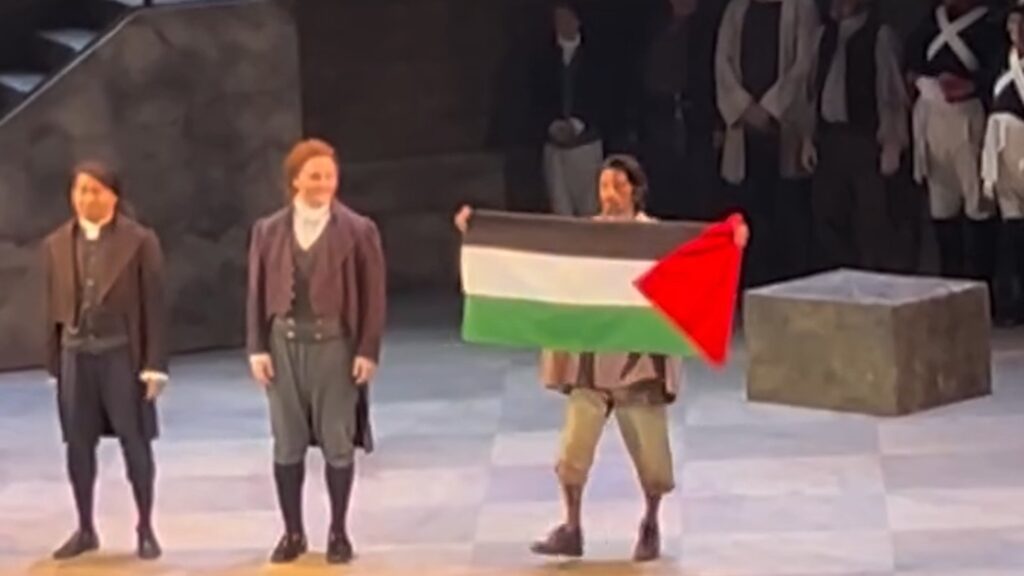
In a recent controversy at Calgary’s opera house, a Canadian opera singer was removed from future performances after he raised a Palestinian flag on stage during a show. The incident sparked intense reactions both within the opera community and among the public. The opera house made the decision to replace the singer due to the political implications of the gesture and their policy on maintaining a neutral atmosphere at performances.
The singer, whose identity has not been publicly disclosed, displayed the flag as a form of political expression. This action brought attention to the ongoing Israeli-Palestinian conflict and sparked debate about the role of political activism in art and performance spaces.
The opera house released a statement affirming their commitment to inclusivity and respect for diverse viewpoints while maintaining that political statements on stage during performances are inappropriate. The decision to remove the singer was framed as necessary to uphold the institution’s reputation as a neutral venue focused on artistic expression.
The incident has raised questions about freedom of speech and the extent to which artists can use their platform to highlight political issues. Some supporters of the singer argue that art has historically been a vehicle for social and political change and that suppressing such expressions diminishes important conversations.
Others believe that cultural institutions should remain apolitical to foster an environment where art can be enjoyed without division. The situation has triggered discussions across social media and within Canadian arts circles on balancing artistic freedom with organizational policies.
This event reflects a broader global conversation about the intersection of politics and cultural institutions, especially in contexts where highly charged geopolitical issues are involved. The Calgary opera house’s stance indicates a cautious approach aiming to avoid alienation of patrons or stakeholders.
As the debate continues, the opera community and the public will be watching closely to see how institutions handle similar situations in the future and how artists navigate the complex relationship between their creative work and political expression.