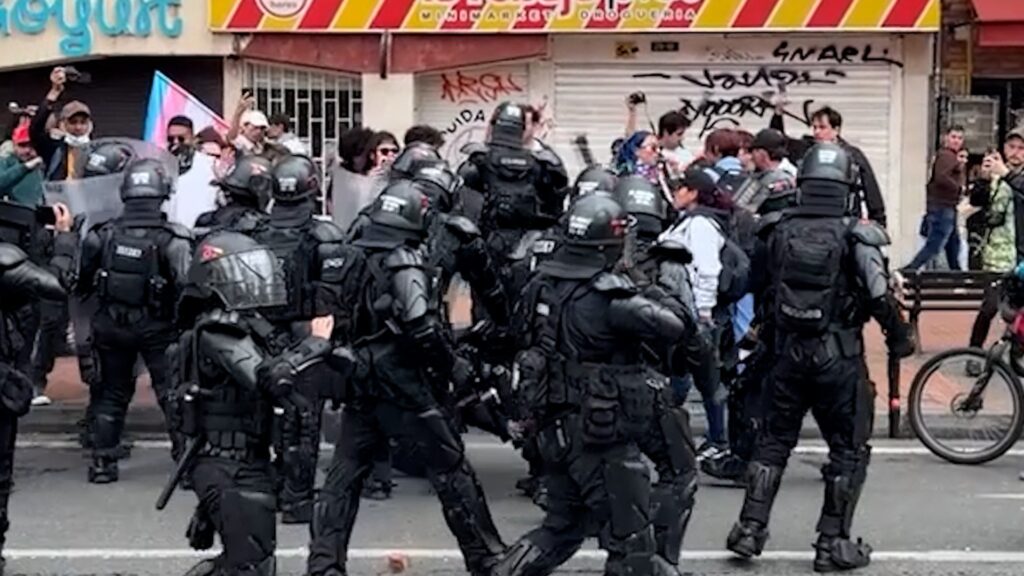
In a dramatic series of events outside Colombia’s National Museum in Bogota, protesters clashed with police, accusing the government of attempting to erase the country’s history. The protest, which drew significant attention from both local media and international observers, escalated as law enforcement officers deployed tear gas and water cannons to disperse the crowd.
The demonstrators gathered to voice their concerns about the government’s approach to cultural preservation and historical representation. Many protesters argue that recent policies and actions undermine Colombia’s rich and diverse heritage, effectively silencing important narratives and communities.
The National Museum, a symbol of Colombia’s historical memory, became the focal point of the unrest. Protesters claimed that changes in exhibit content, government funding cuts, and plans for restructuring threaten to distort or omit key aspects of Colombian history.
Security forces faced criticism for their aggressive tactics, although authorities insisted that their response was necessary to maintain order and protect the museum’s integrity. Several protesters sustained minor injuries during the dispersal, and several were detained.
Human rights organizations have called for an independent investigation into the police’s use of force, advocating for dialogue between the government and civil society to address the protesters’ grievances.
The incident highlights broader tensions in Colombia regarding historical memory, identity, and the role of cultural institutions. It underscores the challenges faced by nations striving to balance modernization with respect for their past.
As protests continue, the Colombian government is under increasing pressure to engage with historians, cultural experts, and community leaders to ensure that history is preserved authentically and inclusively.
This confrontation at the National Museum serves as a poignant reminder of the power of history in shaping national identity and the importance of safeguarding it against political and ideological interference.