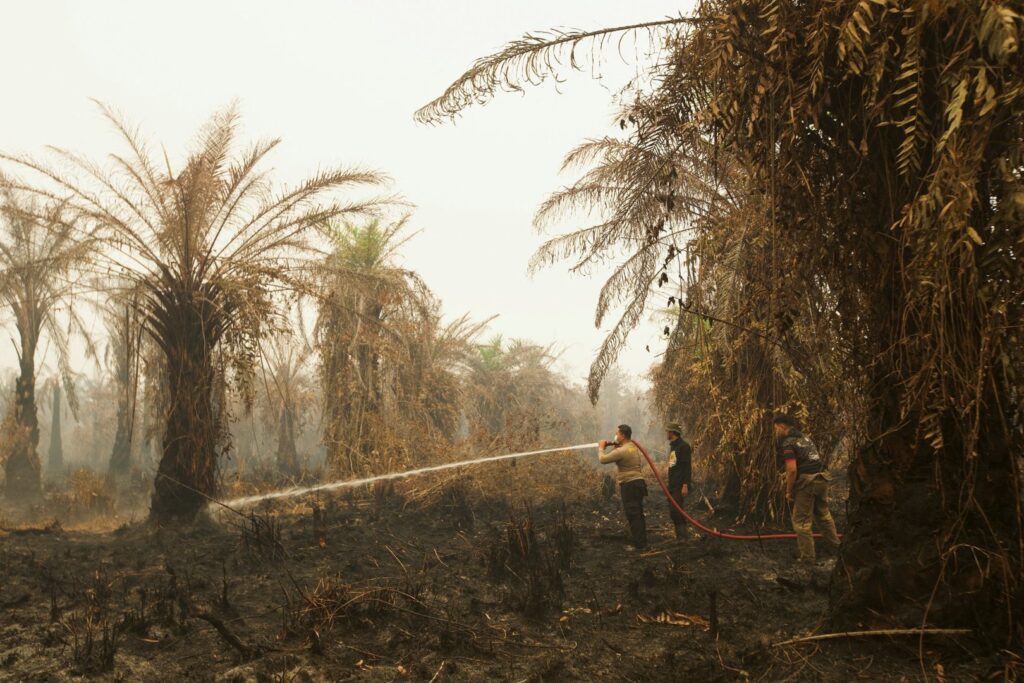
Indonesia is currently grappling with its most severe forest fires and toxic haze in over a decade, marking the worst environmental crisis of this kind since 2013. The intense fires have ravaged vast areas, primarily in the provinces of Sumatra and Kalimantan, engulfing surrounding regions in thick, hazardous smoke.
These destructive forest fires have been exacerbated by a combination of prolonged dry weather, human activities such as illegal slash-and-burn farming practices, and the ongoing El Niño climate phenomenon, which reduces rainfall and increases temperatures.
The toxic haze poses serious health risks to millions, leading to respiratory problems, eye irritation, and other health complications among local populations and neighboring countries affected by the drifting smoke. Schools, airports, and businesses have been forced to close or limit operations due to the poor air quality.
The Indonesian government has mobilized thousands of firefighters and military personnel to combat the blazes, employing water-bombing aircraft and helicopters, and implementing emergency response plans to evacuate vulnerable communities. However, the scale of the fires and the challenging terrain hamper containment efforts.
Environmentalists warn that these recurrent fires not only devastate biodiversity by destroying valuable peatlands and rainforest ecosystems but also contribute significantly to global carbon emissions, worsening the climate crisis. They urge stronger enforcement of land use laws and investment in sustainable agricultural practices to prevent future outbreaks.
Neighboring countries such as Malaysia and Singapore have also been affected by the haze, leading to diplomatic dialogue on regional cooperation for forest fire prevention and air quality management. International aid and technical support are being sought to bolster firefighting capabilities and environmental recovery programs.
This catastrophe highlights the complex interplay between climate change, economic activities, and environmental stewardship, underscoring the urgent need for coordinated action at national and international levels to mitigate similar disasters in the future.